
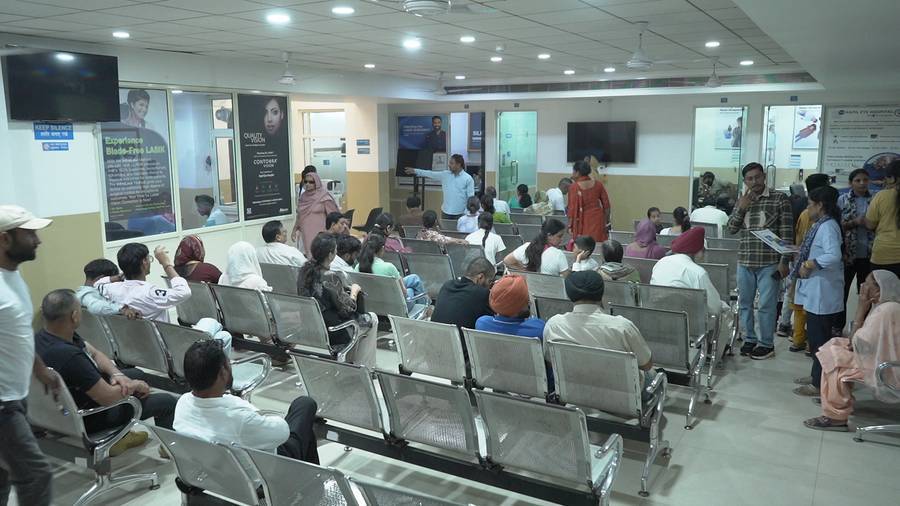
An eye examination does not end when you leave the clinic. The findings from your first visit give your doctor a starting point, and follow-up visits show whether your eyes are stable, improving or changing.
Many people ask the same questions after a consultation. Do I really need to come back if my vision feels fine? How often should I get an eye check-up? Which symptoms mean I should not wait for my scheduled date?
This guide explains how follow-up eye examinations work and how the schedule differs for spectacle wearers, people with diabetes, glaucoma patients and people with cataract. It also lists the symptoms that need earlier attention. It is general information and does not replace your ophthalmologist’s advice, because your follow-up interval depends on what the doctor finds in your own eyes.
Why Are Regular Eye Follow-Up Examinations Important?
Several eye conditions cause no pain and no obvious change in vision in their early stages. By the time symptoms appear, some damage may already have happened. A follow-up eye examination lets your doctor catch these changes early.
Regular eye check-ups help in four main ways:
- Comparing findings over time. A single reading, such as eye pressure, can be misleading. A series of readings shows the real trend.
- Checking whether treatment is working. Eye drops, spectacles or other treatment may need adjusting.
- Detecting problems early. Conditions such as glaucoma and diabetic retinopathy are easier to manage when found early.
- Answering your questions. Follow-up visits give you a chance to clear doubts about medicines, symptoms and daily activities.
Feeling comfortable is not proof that nothing has changed. If your doctor has advised a review, keep it even when your eyes feel normal.
When Should You Schedule Your Next Eye Check-Up?
There is no single schedule that suits everyone. The right interval depends on your age, your eye condition, your general health and your doctor’s findings. A few common situations are explained below.
Spectacle power follow-up vs. routine eye examination
These two are often confused, but they have different purposes.
A spectacle power follow-up is a review of your glasses prescription. It checks whether your current glasses still give you clear, comfortable vision. You may need one if your glasses feel unsuitable, if you get headaches or eye strain, or if your doctor has advised a repeat check after a prescription change. It is also advised if you are a child or a young person whose prescription is still changing.
A routine eye examination is wider. Besides checking your power, the doctor examines the overall health of your eyes, including the front part of the eye, eye pressure and the retina where needed. This can pick up problems that a spectacle check alone would miss.
As a general guide, adults without any eye condition benefit from a routine eye check-up at regular intervals, which your doctor will advise based on your age and risk factors. Children, older adults and people with existing eye or health conditions usually need more frequent reviews.
If your vision stays blurred even after getting new glasses, do not keep changing frames. Ask your doctor to check why.
Follow-Up Care for Diabetes Patients
Diabetes can damage the tiny blood vessels in the retina, a condition called diabetic retinopathy. It can develop without any change in sight in the early stages, so people with diabetes need scheduled retinal examinations even when they see well.
Points to keep in mind:
- Regular retinal examination is advised for everyone with diabetes. Your doctor will set the interval according to your findings. People with signs of retinal changes are usually reviewed more often.
- Pregnancy, long-standing diabetes, high blood pressure and poorly controlled blood sugar may call for closer monitoring.
- Dilated eye examination is often part of the check-up. Your vision may stay blurred for a few hours afterwards, so avoid driving and consider bringing a companion.
- Tell your eye doctor about your diabetes history, your recent blood sugar levels and any earlier retinal treatment.
Good control of blood sugar, blood pressure and cholesterol, managed together with your physician, protects your eyes alongside regular examinations.
Read more about diabetic retinopathy treatment and retina treatment.
Follow-Up Monitoring for Glaucoma
Glaucoma is a long-term condition that damages the optic nerve, often slowly and without early symptoms. Vision lost to glaucoma usually cannot be recovered, so the aim of follow-up is to protect the sight you have.
During glaucoma follow-up visits, your doctor may check:
- Eye pressure
- The appearance of the optic nerve
- Visual field changes, through a field test
- How well your eye drops or other treatment are working
Some points matter especially for glaucoma patients:
- Eye pressure alone does not tell the whole story. Some people develop glaucoma with pressure in the usual range, and some people with raised pressure have no nerve damage.
- Use your drops exactly as prescribed. Missing doses can allow damage to continue silently.
- Do not stop treatment because you feel fine. Absence of pain does not mean the condition is under control.
- Report problems with drops, such as irritation, difficulty putting them in or cost, to your doctor instead of stopping them.
If you have a family history of glaucoma, are over 40, have high eye pressure or are on long-term steroids, regular eye check-ups are particularly important.
Learn more about glaucoma treatment.
Eye Examination After Cataract Treatment
Cataract is a clouding of the eye’s natural lens. Not every cataract needs immediate surgery. In its early stage, it may only need regular monitoring, and follow-up visits help your doctor judge when it starts to affect your daily life.
Cataract monitoring before surgery
Your doctor will track changes in your vision, glare, difficulty reading or driving at night, and the condition of the lens. Surgery is usually considered when the cataract interferes with your routine activities, not just because a cataract exists.
Follow-up after cataract surgery
After cataract surgery, follow-up visits are essential for safe healing. Your surgeon will usually review you the next day and again over the following days and weeks. Exact timings depend on your case.
During these visits, the doctor checks that the eye is healing well, the eye pressure is stable, and there are no signs of infection or inflammation. They also adjust your eye drops, and once the eye has settled, they will advise when to get a final spectacle prescription if needed.
After surgery, remember to:
- Use the prescribed drops at the correct times and for the full duration
- Avoid rubbing or pressing the eye
- Follow the surgeon’s advice on washing, dust and strenuous activity
- Attend every scheduled review
A few months or years later, some patients notice their vision becoming hazy again. This can be due to a thickening of the membrane behind the lens implant and is usually treatable, so report any such change to your doctor.
Read more about cataract and phacoemulsification services.
When Should You Visit an Eye Doctor Earlier?
Do not wait for your scheduled date if you notice a new or worsening symptom. Some symptoms need prompt attention, and some need emergency care.
Seek emergency eye care immediately if you have:
- Sudden loss of vision in one or both eyes
- A dark curtain or shadow spreading across your vision
- A sudden shower of new floaters, especially with flashes of light
- Severe eye pain, especially with redness, headache, nausea or halos around lights
- A serious eye injury, or a foreign object in the eye
- Chemical splashed into the eye. Start rinsing gently with plenty of clean running water straight away, and get medical help while you do so.
Book an earlier appointment if you notice:
- Gradual blurring of vision
- New distortion or wavy lines in straight objects
- Persistent redness, watering, discharge or swelling
- Increased sensitivity to light
- Difficulty seeing at night or in dim light
- Frequent headaches or eye strain
- A child squinting, tilting the head, sitting very close to the screen or struggling to see the board
If you wear contact lenses and develop a painful red eye, light sensitivity or reduced vision, remove the lenses and see a doctor urgently, as this can indicate an infection of the cornea.
If you are unsure how urgent a symptom is, call the hospital, describe it and ask how soon you should be seen.
How to Maintain Your Eye Examination Records?
Good records make every follow-up visit more useful. They help your doctor compare today’s findings with earlier ones, and they save you from repeating tests unnecessarily.
Keep these together in one folder, physical or digital:
- Your current and previous spectacle prescriptions
- The doctor’s diagnosis and the plan for treatment or observation
- Reports and images such as retinal scans, visual field results or corneal scans
- Names and doses of your eye drops and other medicines
- Dates of any eye surgery, laser treatment or injury
- Allergies or reactions to medicines
- Your next review date and the reason for it
Tips for easier follow-up:
- Set a phone reminder that names the reason, such as “glaucoma pressure review” or “post-surgery check”
- Bring your glasses, reports and all eye drops to every visit
- Write down your questions and any changes in your vision before you go
- If you are changing doctors or cities, ask for a summary of your records
- If a family member helps manage your care, keep them informed of your medicine schedule and appointments
You do not need to understand every number in a report. What matters is that the records are complete and available when your doctor needs them.
Frequently Asked Questions
1. How often should I get a regular eye check-up?
It depends on your age, eye health and medical conditions. Your doctor will advise an interval, and people with diabetes, glaucoma or other eye conditions generally need more frequent reviews.
2. Should I come for follow-up if my eyesight feels normal?
Yes, if your doctor has advised it. Conditions like glaucoma and diabetic retinopathy can progress without early symptoms.
3. What is the difference between a spectacle power check and a routine eye examination?
A power check focuses on your glasses prescription. A routine examination also assesses the health of the eye, including eye pressure and the retina where needed.
4. Does high eye pressure always mean glaucoma?
No. It is a risk factor, but diagnosis also depends on the optic nerve and visual field findings.
5. Can I stop my eye drops once my eyes feel better?
Do not stop or change any prescribed medicine without your doctor’s advice, especially in long-term conditions such as glaucoma.
6. How soon after cataract surgery will I need a follow-up?
Usually the next day and then at intervals over the following weeks. Your surgeon will give you the exact schedule.
7. What should I bring to a follow-up appointment?
Bring your current glasses, previous prescriptions, reports, your eye drops (or clear photos of the labels) and a list of your questions.
8. Where can I get information about refractive procedures like LASIK or ICL?
Suitability for these procedures needs a separate detailed assessment. You can read about the options on our complete refractive solutions page.
Conclusion
A follow-up eye examination is how your doctor keeps track of your eye health over time. Keep your review dates, use your medicines as prescribed, maintain your records and do not ignore sudden changes in your vision. Leave each visit knowing what was found, what the plan is and when to come back.
To schedule a follow-up eye check-up at Kapil Eye Hospital, Ambala, call 9996739333 or visit the contact page.
Medical information notice: This article provides general patient education and is not individual diagnosis, treatment advice or an emergency service. Your ophthalmologist should decide your examination and follow-up schedule. Seek urgent care for sudden or severe eye symptoms.