
When it comes to maintaining the health of your eyes, particularly as you age, finding the right hospital for cataract surgery is critical. If you’re searching for the Cataract Hospital in Ambala, Kapil Eye Hospital stands out as a trusted name, offering advanced robotic bladeless laser cataract surgery. This cutting-edge technology ensures precision, safety, and improved outcomes for patients suffering from cataracts. Let’s dive deeper into what makes this procedure unique and why Kapil Eye Hospital is the top choice for Cataract Hospital in Ambala for Robotic Laser Surgery.
Understanding Cataract
Cataract are one of the leading causes of vision loss worldwide, particularly among older adults. A cataract forms when the natural lens of the eye becomes cloudy, leading to blurry vision, difficulty seeing at night, and sensitivity to light. Over time, this condition can significantly impact daily activities, making timely treatment essential.
Fortunately, modern cataract surgery has evolved to become a quick, safe, and highly effective procedure. Among the latest advancements in cataract surgery is robotic bladeless laser technology, which Kapil Eye Hospital excels in providing.
What is Robotic Bladeless Laser Cataract Surgery?
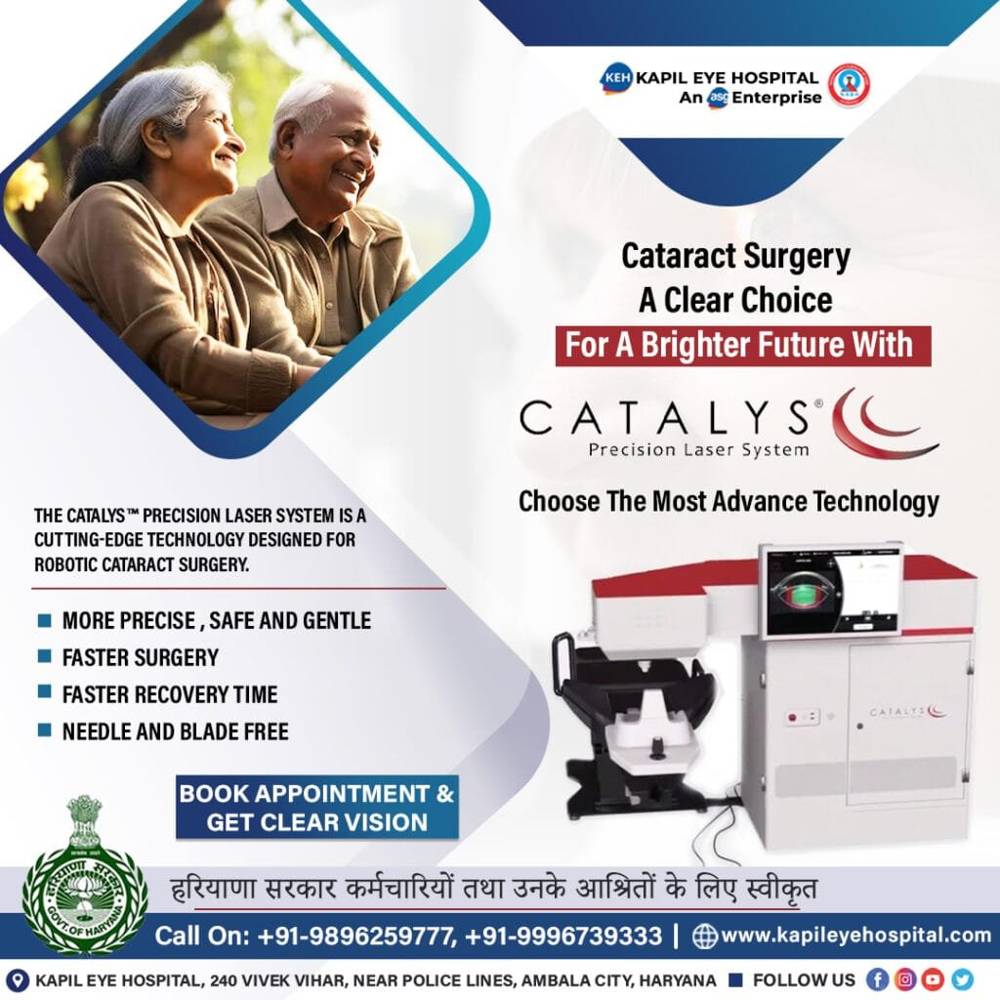
Robotic bladeless laser cataract surgery represents a revolution in eye care. Unlike traditional cataract surgery, which involves manual incisions, this technique uses a femtosecond laser to perform precise, bladeless incisions. Here’s a step-by-step breakdown of the process:
- Advanced Imaging: The procedure begins with detailed imaging of your eye using advanced technology. This imaging creates a 3D map of your eye, allowing the surgeon to plan the surgery with unparalleled accuracy.
- Laser Precision: The femtosecond laser is used to create incisions and break up the cloudy lens into smaller, softer pieces. This eliminates the need for a surgical blade and ensures more precise cuts.
- Lens Replacement: Once the cloudy lens is removed, it is replaced with an artificial intraocular lens (IOL) tailored to your specific vision needs.
- Quick Recovery: The bladeless technique minimizes trauma to the eye, resulting in faster healing and better visual outcomes.
Benefits of Robotic Bladeless Laser Cataract Surgery
Explore More Advanced Cataract Surgery Resources
Learn more about robotic bladeless cataract surgery, Femto laser technology, premium lens options, and advanced cataract treatment solutions available at Kapil Eye Hospital.
“`
Patients who opt for robotic bladeless laser cataract surgery at theCataract Hospital in Ambala experience several benefits, including:
- Enhanced Precision: The laser technology ensures highly accurate incisions and lens placement.
- Improved Safety: The procedure is minimally invasive, reducing the risk of complications.
- Customized Treatment: Advanced imaging allows for a personalized surgical plan based on your eye’s unique anatomy.
- Faster Recovery: Patients experience less discomfort and quicker healing compared to traditional cataract surgery.
- Superior Visual Outcomes: Many patients achieve sharper, clearer vision after the procedure.
Why Choose Kapil Eye Hospital for Cataract Surgery?
Kapil Eye Hospital has established itself as a pioneer in eye care, offering world-class facilities and cutting-edge treatments. Here’s why it’s considered the Cataract Hospital in Ambala:
1. State-of-the-Art Technology
Kapil Eye Hospital is equipped with the latest robotic bladeless laser technology, ensuring every patient receives the highest standard of care. The hospital’s investment in advanced equipment demonstrates its commitment to providing innovative and effective treatments.
2. Experienced Surgeons
The hospital boasts a team of highly skilled ophthalmologists with extensive experience in performing robotic cataract surgeries. Their expertise ensures successful outcomes for even the most complex cases.
3. Comprehensive Eye Care Services
In addition to cataract surgery, Kapil Eye Hospital offers a wide range of services, including LASIK, glaucoma treatment, and retinal care. This makes it a one-stop destination for all your eye care needs.
4. Patient-Centric Approach
Kapil Eye Hospital is known for its compassionate care and patient-centric approach. From the initial consultation to post-operative follow-ups, the hospital’s team ensures a seamless and comfortable experience for every patient.
5. Affordable and Transparent Pricing
Despite offering advanced treatments, Kapil Eye Hospital ensures affordability without compromising on quality. Transparent pricing and cashless options further enhance the patient experience.
Who Can Benefit from Robotic Bladeless Laser Cataract Surgery?
This advanced procedure is ideal for individuals:
- Experiencing significant vision loss due to cataracts
- Seeking a faster recovery with minimal discomfort
- Wanting a more precise and safer alternative to traditional surgery
- Looking for customized solutions to improve their vision
If you’re dealing with cataracts and want the possible care, Kapil Eye Hospital’s robotic bladeless laser cataract surgery is an excellent option.
Tips for Preparing for Your Cataract Surgery
To ensure a smooth and successful surgery, here are some tips:
- Follow your doctor’s instructions regarding pre-operative tests.
- Avoid wearing contact lenses before the procedure, as advised by your surgeon.
- Arrange for someone to accompany you to and from the hospital.
- Discuss any medications you’re taking to avoid potential complications.
Aftercare and Recovery
Post-operative care plays a crucial role in ensuring the success of your cataract surgery. Here’s what to keep in mind:
- Use the prescribed eye drops to prevent infection and reduce inflammation.
- Avoid rubbing your eyes or engaging in strenuous activities for a few weeks.
- Attend all follow-up appointments to monitor your recovery.
- Protect your eyes from dust and sunlight by wearing sunglasses.
Conclusion
When it comes to advanced cataract treatment, Kapil Eye Hospital is a name you can trust. With its state-of-the-art robotic bladeless laser technology, experienced surgeons, and patient-first approach, it’s no wonder why it’s considered the Cataract Hospital in Ambala. Don’t let cataracts affect your quality of life. Schedule a consultation today and take the first step toward clearer, brighter vision.
Explore More Advanced Cataract Surgery Resources
Learn more about robotic bladeless cataract surgery, Femto laser technology, premium lens options, and advanced cataract treatment solutions available at Kapil Eye Hospital.
Cataracts, a common age-related condition, can cloud the natural lens of the eye, leading to blurred vision and decreased quality of life. Fortunately, advancements in cataract surgery have revolutionized treatment options, offering safer and more precise techniques for restoring clear vision. One such innovation is Blade-Free Femto Cataract Surgery, a cutting-edge procedure that utilizes femtosecond laser technology to enhance surgical outcomes. At Kapil Eye Hospital, we’re committed to providing patients with the highest standard of care, including state-of-the-art treatments like BladeFree Femto Surgery.
Understanding Blade-Free Femto Cataract Surgery:
- Blade-Free Precision: Unlike traditional cataract surgery, which relies on handheld blades for incisions, Blade-Free Cataract Surgery utilizes a femtosecond laser to create precise incisions and fragment the cataract-damaged lens. This blade-free approach offers greater accuracy and predictability, leading to improved visual outcomes and reduced risk of complications.
- Customized Treatment: The femtosecond laser can be programmed to perform precise incisions and lens fragmentation tailored to each patient’s unique eye anatomy, allowing for customized treatment and optimal surgical outcomes.
- Minimally Invasive Technique: Blade-Free Femto Cataract Surgery is minimally invasive, resulting in less trauma to the surrounding eye tissues and faster recovery times compared to traditional cataract surgery. This advanced technique also reduces the risk of intraoperative complications, such as corneal damage and infection, leading to a smoother and safer surgical experience.
Benefits of Blade-Free Femto Cataract Surgery:
- Enhanced Precision and Accuracy: The precise nature of femtosecond laser technology allows for more predictable surgical outcomes, leading to improved visual acuity and reduced reliance on glasses or contact lenses post-surgery.
- Reduced Risk of Complications: By eliminating the need for handheld blades, Blade-Free Femto Cataract Surgery minimizes the risk of corneal damage, infection, and other intraoperative complications, leading to a safer and more comfortable surgical experience for patients.
- Faster Recovery: Patients undergoing Blade-Free Femto Cataract Surgery typically experience faster visual recovery and less discomfort compared to traditional cataract surgery, allowing them to return to their daily activities sooner.
- Customized Treatment Options: The ability to customize incisions and lens fragmentation patterns with femtosecond laser technology enables surgeons to tailor treatment to each patient’s unique needs, optimizing visual outcomes and patient satisfaction.
- Long-term Benefits: Studies have shown that Blade-Free Femto Cataract Surgery may offer superior long-term stability and refractive outcomes compared to traditional cataract surgery, providing patients with lasting visual improvement and enhanced quality of life.
Kapil Eye Hospital: Your Trusted Partner
Experienced Surgeons: Our team of highly skilled ophthalmic surgeons at Kapil Eye Hospital has extensive experience in performing Blade-Free Femto Cataract Surgery, ensuring safe and successful outcomes for our patients.
State-of-the-Art Facilities: We utilize the latest diagnostic and surgical technologies, including femtosecond laser technology, to provide patients with the highest standard of care and achieve optimal visual outcomes.
Comprehensive Care: From initial consultation to post-operative follow-up, our dedicated staff is committed to providing personalized care and support to ensure a positive surgical experience and excellent visual results for every patient.
Conclusion:
BladeFree Femto Cataract Surgery represents a significant advancement in cataract treatment, offering patients the benefits of enhanced precision, safety, and visual outcomes. At Kapil Eye Hospital, we’re proud to offer this state-of-the-art procedure to our patients, helping them achieve clearer vision and improved quality of life. If you’re considering cataract surgery, schedule a consultation with us today and discover the difference that Blade-Free Femto Cataract Surgery can make in your life.
Frequently Asked Questions
What is Femto Cataract Surgery?
Femto Cataract Surgery is an advanced technique that utilizes femtosecond laser technology to perform key steps of cataract removal, including creating precise incisions and fragmenting the cataract-damaged lens, without the need for handheld blades.
How does Blade-Free Femto Surgery differ from traditional cataract surgery?
Blade-Free Femto Cataract Surgery eliminates the use of handheld blades, relying instead on a femtosecond laser for creating incisions and fragmenting the lens. This results in enhanced precision, reduced risk of complications, and faster recovery compared to traditional cataract surgery.
What are the benefits ?
The benefits include enhanced precision and accuracy, reduced risk of complications, faster recovery, customized treatment options, and superior long-term visual outcomes compared to traditional cataract surgery.
Am I a candidate for Blade-Free Femto Cataract Surgery?
Most individuals with cataracts are candidates for Blade-Free Femto Surgery. Your ophthalmologist at Kapil Eye Hospital will conduct a comprehensive eye evaluation to determine if you are a suitable candidate for the procedure.
Is Blade-Free Femto Cataract Surgery safe?
Yes, Blade-Free Femto Cataract Surgery is considered safe and has been shown to have a lower risk of complications compared to traditional cataract surgery. Your surgeon at Kapil Eye Hospital will discuss any potential risks and benefits with you before the procedure.
What should I expect during Blade-Free Femto Cataract Surgery?
During the procedure, you will be comfortably positioned in the surgical suite. The femtosecond laser will be used to create precise incisions and fragment the cataract-damaged lens. The entire process is typically painless and takes only a few minutes.
What is the recovery process ?
Most patients experience minimal discomfort and can resume normal activities within a day or two after Blade-Free Femto Cataract Surgery. Your surgeon will provide detailed post-operative instructions and schedule follow-up appointments to monitor your progress.
Will I need glasses or contact lenses after Surgery?
While some patients may still require glasses or contact lenses for certain activities such as reading or driving, many experience improved vision and reduced dependence on corrective eyewear after Blade-Free Femto Cataract Surgery.
How long does the visual improvement last after Surgery?
The visual improvement achieved with Blade-Free Femto Cataract Surgery is typically long-lasting. However, it’s important to attend regular follow-up appointments at Kapil Eye Hospital to monitor your eye health and ensure optimal visual outcomes.
Explore More Advanced Cataract Surgery Resources
Discover the latest advancements in cataract treatment, including Femto laser technology, robotic bladeless surgery, premium intraocular lenses, and comprehensive eye care solutions.
So, you’ve just had Contoura Vision surgery—or maybe you’re planning to—and you’re excited about life without glasses. That excitement is natural. After all, Contoura Vision is one of the most advanced laser eye surgeries available today. But here’s the thing: while the surgery is quick, what you do afterward matters even more.
In fact, most complications do not happen as a result of the surgery itself—but rather due to small mistakes made by the patient during the recovery process. Now let’s discuss the common mistakes after Contoura Vision surgery and how Kapil Eye Hospital, known to many as the best Contoura hospital in Ambala, supports safe and comfortable healing.
1. Touching or Rubbing Your Eyes
After you have the surgery, your eyes might feel slightly itchy or dry. This is completely normal. But touching or rubbing, no matter how softly, is not! Rubbing your eyes post-surgery can affect healing in two ways: first, the corneal surface needs to settle and could be dislodged, and second, it increases the risk of infection.
At Kapil Eye Hospital, patients are given protective shields to wear at night and are reminded gently but clearly: no touching, even if it itches!
2. Skipping Eye Drops
Eye drops prescribed after Contoura Vision surgery have just as much of an important purpose as medication: they are meant to support your eyes. They both hydrate the eyes, prevent infection, and support healing. If you miss an eye drop, even once or twice, that could mean your recovery gets set back.
To help patients remember, Kapil Eye Hospital provides an easy to follow eye drop schedule along with reminders for those who need them.
3.Too Much Screen Time Too Soon
Many of you are already glued to your phone or laptop every day, but after surgery, you should really limit your screen time. If you are staring at digital screens too much, you can strain and dry up your eyes- especially when your eyes are fresh off of some important adjustment..
Kapil Eye Hospital, one of the most trusted eye hospitals near Ambala, recommends taking a few days off from work and avoiding unnecessary screen time until the healing begins.
4. Ignoring Follow-Up Visits
You will feel absolutely wonderful with your eyes after a day or two; however, that doesn’t mean you can skip your follow-up appointments. The purpose of the follow-up is to catch any little issues before they become big ones!
Kapil Eye Hospital ensures follow-ups are not only scheduled, but that each patient gets a personal reminder. It’s part of their patient-first approach.
5. Stepping Out Without Protection
Your eyes are particularly sensitive to light, dust, and pollutants just after surgery and even a short stroll outside without sunglasses can irritate your eyes. In some cases, the light exposure from bright sunlight and dust or airborne particles might even slow the healing process.
The team at Kapil Eye Hospital provides high-quality protective eyewear and emphasizes staying indoors during the first few days unless it’s necessary to go out.
6. Applying Eye Makeup Too Early
It can be tempting to wear eyeliner or mascara when your eyes are looking fine, but makeup can introduce bacteria into your eyes if you wear it too soon after surgery.
The doctors at Kapil Eye Hospital recommend waiting for 10–14 days and resuming only when Kapil Eye Hospital gives you the green light during your follow-up appointment.
Why is Kapil Eye Hospital the Best Option
When searching for an ultimate vision correction experience, Kapil Eye Hospital in Ambala, isn’t just a point surgery, they treat the recovery process with just as much effort.
The pre-surgery counseling and post-surgery follow up will provide information about everything that is going to happen, and they work with you to make sure you understand every step. If you live in or around Ambala, and you’re searching for an experienced trusted eye hospital that you can trust for care, your search ends here, because they treat your eyes in Ambala. The doctors are not only trained on the latest technology Contoura, but they genuinely care and go the extra distance to ensure you enjoy a smooth recovery without complications.
Conclusion
Contoura Vision can give you the freedom from glasses you’ve always wanted—but that freedom will depend upon what you do after undergoing the surgery. Avoiding these simple mistakes can make a big difference.
And by working with Kapil Eye Hospital, you won’t be assumed to make all decisions alone. They can help you, check on you, and help you see the world more clearly, one cautious transition at a time.
Explore More LASIK & Vision Correction Resources
Learn more about Contoura Vision, LASIK, SILK ELITA, ICL surgery, and advanced vision correction procedures designed to help you achieve clear, spectacle-free vision.
The cornea is the clear, curved front layer of the eye that plays a vital role in helping you see clearly. It works by allowing light to enter the eye and focusing it properly on the retina, creating sharp and clear vision. Besides improving vision, the cornea also acts as a protective shield against dust, bacteria, viruses, and minor eye injuries.
Because the cornea is highly sensitive, even a small scratch, infection, or disease can cause significant discomfort. Common symptoms include eye pain, redness, blurred vision, watering, sensitivity to light, and irritation. If these problems are ignored, they can lead to serious complications such as corneal scarring or permanent vision loss.
Cornea Treatment in Ambala
If you are searching for Cornea Treatment in Ambala, Kapil Eye Hospital offers comprehensive diagnosis and treatment for a wide range of corneal diseases. Our experienced team provides advanced eye care using modern diagnostic equipment and the latest treatment techniques. Whether you are suffering from a corneal infection, corneal ulcer, keratoconus, dry eye-related corneal damage, corneal injury, or corneal scarring, we provide personalized treatment based on your specific eye condition.
At Kapil Eye Hospital, every patient undergoes a detailed eye examination before a treatment plan is recommended. Depending on the severity of the condition, treatment may include medications, specialized corneal procedures, or corneal transplant surgery when necessary. Our primary goal is to preserve your natural vision, relieve symptoms, and help you regain healthy eyesight through safe, effective, and evidence-based eye care.
With a strong focus on ethical medical practice, advanced technology, and patient-centered care, Kapil Eye Hospital has become a trusted destination for people seeking quality Cornea Treatment in Ambala. From the first consultation to complete recovery, our team is committed to providing compassionate care and the best possible visual outcomes for every patient.
What is the Cornea?
The cornea is the transparent outer layer that covers the front of your eye, including the iris and pupil. It functions like a clear window, allowing light to enter the eye while helping focus it correctly for clear vision. A healthy cornea is essential for everyday activities such as reading, driving, using digital devices, and recognizing faces.
Apart from improving vision, the cornea also serves as the eye’s first line of defense against dust, dirt, bacteria, and other harmful particles. Since it contains thousands of nerve endings, the cornea is extremely sensitive. Even a minor injury or infection can cause noticeable pain, watering, redness, and blurred vision.
Maintaining a healthy cornea is important for long-term eye health. Regular eye checkups, good eye hygiene, and prompt treatment of any eye problem can help prevent serious complications. If you notice persistent eye discomfort, blurred vision, or unusual redness, it is important to consult an experienced eye specialist without delay.
Common Cornea Problems
The cornea is one of the most important parts of the eye because it helps you see clearly and protects your eyes from infections and injuries. However, different diseases and injuries can affect the cornea, leading to discomfort, blurred vision, and even permanent vision loss if left untreated.
Some corneal conditions develop suddenly after an infection or injury, while others progress slowly over time without noticeable symptoms in the early stages. This is why regular eye examinations and early diagnosis are essential for maintaining healthy vision.
At Kapil Eye Hospital, experienced team diagnose and treat a wide range of corneal disorders using advanced diagnostic technology and personalized treatment plans. Whether your condition requires medication, specialized corneal procedures, or surgery, our goal is to provide the most effective treatment while preserving your eyesight.
Below are some of the most common corneal conditions treated at Kapil Eye Hospital.
Corneal Infection (Keratitis)
A corneal infection, also known as keratitis, occurs when bacteria, viruses, fungi, or parasites infect the cornea. This condition can develop after an eye injury, poor contact lens hygiene, or exposure to contaminated water. People with dry eyes or weakened immunity are also at a higher risk of developing corneal infections.
Since the cornea is responsible for clear vision, an untreated infection can quickly damage its surface, resulting in corneal ulcers, scarring, and permanent vision loss. Seeking medical attention as soon as symptoms appear can help prevent serious complications.
Common Symptoms of Corneal Infection
If you have a corneal infection, you may notice:
- Persistent redness in the eye
- Moderate to severe eye pain
- Watery or teary eyes
- Blurred or cloudy vision
- Sensitivity to sunlight or bright lights
- Feeling like dust or sand is trapped inside the eye
- Swelling around the eyelids
- White or gray patches on the cornea in advanced cases
What Causes Corneal Infection?
A corneal infection may develop because of:
- Poor contact lens cleaning habits
- Wearing contact lenses while sleeping
- Eye injuries or corneal scratches
- Bacterial, viral, fungal, or parasitic infections
- Long-term dry eye disease
- Exposure to contaminated water
- Reduced immunity due to certain medical conditions
Treatment for Corneal Infection
At Kapil Eye Hospital, every patient undergoes a detailed eye examination to determine the exact cause of the infection before treatment begins. Based on the diagnosis, our specialists may recommend:
- Antibiotic eye drops for bacterial infections
- Antiviral medicines for viral keratitis
- Antifungal medications for fungal infections
- Lubricating eye drops to improve eye comfort
- Pain-relieving medications when required
- Regular follow-up visits to monitor healing and prevent complications
Early treatment is the best way to protect your vision. If you experience persistent redness, eye pain, blurred vision, or increased sensitivity to light, consult at Kapil Eye Hospital for expert Cornea Treatment in Ambala. Prompt diagnosis and appropriate treatment can help preserve your eyesight and support a faster recovery.
Corneal Ulcer
A corneal ulcer is a painful open sore that develops on the surface of the cornea. It is considered an eye emergency because, if left untreated, it can permanently damage the cornea and lead to significant vision loss. Corneal ulcers are most commonly caused by infections, but they can also develop after eye injuries, severe dry eyes, or improper use of contact lenses.
The severity of a corneal ulcer depends on how deep the ulcer is and how quickly treatment begins. Early diagnosis and prompt medical care play a vital role in preventing complications and preserving healthy vision.
Signs and Symptoms of a Corneal Ulcer
A person with a corneal ulcer may experience:
- Severe eye pain
- Redness in one or both eyes
- Blurred or cloudy vision
- A white or gray spot on the cornea
- Excessive tearing or watery eyes
- Increased sensitivity to bright light
- Swollen eyelids
- A constant feeling that something is inside the eye
If you notice these symptoms, do not delay seeking professional eye care.
What Causes a Corneal Ulcer?
Several conditions can lead to the development of a corneal ulcer, including:
- Bacterial infections
- Viral infections such as herpes simplex
- Fungal eye infections
- Parasitic infections
- Eye injuries and corneal scratches
- Improper contact lens use or poor lens hygiene
- Long-term dry eye disease
- Chemical burns or exposure to harmful substances
People who wear contact lenses regularly should always follow proper hygiene practices to reduce the risk of infection.
Treatment for Corneal Ulcers
At Kapil Eye Hospital, every corneal ulcer is evaluated carefully to determine its cause and severity before treatment begins. After a detailed eye examination, Dr. develops a treatment plan that is best suited to the patient’s condition.
Treatment may include:
- Antibiotic eye drops for bacterial infections
- Antiviral medicines for viral ulcers
- Antifungal medications for fungal infections
- Lubricating eye drops to support healing
- Medicines to reduce pain and inflammation
- Regular monitoring to ensure the ulcer heals properly
- Advanced corneal procedures or corneal transplant surgery if the cornea has been severely damaged
Why Early Treatment Matters
A corneal ulcer should never be ignored. Delaying treatment increases the risk of corneal scarring, permanent vision loss, and the need for complex surgical procedures. Receiving treatment in the early stages greatly improves the chances of a full recovery.
If you experience severe eye pain, persistent redness, blurred vision, or notice a white spot on your eye, consult at Kapil Eye Hospital without delay. Our experienced team provides advanced Cornea Treatment in Ambala using modern technology and evidence-based treatment methods to protect your eyesight and restore healthy vision.
Corneal Injury
A corneal injury happens when the clear front surface of the eye is damaged by a foreign object, accidental trauma, or exposure to harmful chemicals. Although the cornea is strong, it is also highly sensitive. Even a small scratch can cause severe discomfort and affect your vision. Without proper treatment, a corneal injury may increase the risk of infection, corneal scarring, or long-term vision problems.
Eye injuries can occur at home, at work, while playing sports, or during everyday activities. Getting immediate medical attention is the best way to protect your eyesight and prevent complications.
Common Causes of Corneal Injury
Corneal injuries can happen for many reasons, such as:
- Dust, sand, or tiny particles entering the eye
- Scratches caused by fingernails, paper, or sharp objects
- Chemical splashes from cleaning products or industrial chemicals
- Sports-related eye injuries
- Workplace accidents involving metal, wood, or machinery
- Improper use or handling of contact lenses
- Rubbing the eye after a foreign object enters it
Using protective eyewear during risky activities can significantly reduce the chances of eye injuries.
Symptoms of a Corneal Injury
A corneal injury may cause the following symptoms:
- Sharp or sudden eye pain
- Redness of the eye
- Blurred or reduced vision
- Excessive tearing
- Sensitivity to light
- Feeling like something is stuck inside the eye
- Difficulty opening the affected eye
- Swelling around the eye
The severity of symptoms depends on the depth and type of injury.
How is a Corneal Injury Diagnosed?
At Kapil Eye Hospital, Doctors performs a detailed eye examination to assess the extent of the injury. Advanced diagnostic equipment helps identify scratches, foreign bodies, or deeper damage to the cornea, allowing the right treatment to begin without delay.
Treatment for Corneal Injury
Treatment depends on the cause and severity of the injury. Our specialists may recommend:
- Antibiotic eye drops to prevent infection
- Lubricating eye drops to support healing and reduce irritation
- Medicines to relieve pain and inflammation
- Removal of dust, metal particles, or other foreign bodies from the eye
- A protective eye shield to safeguard the cornea during recovery
- Minor corneal procedures for deeper injuries
- Regular follow-up appointments to monitor healing
Our priority is to relieve discomfort, prevent complications, and restore healthy vision as quickly as possible.
First Aid Tips for a Corneal Injury
If you or someone around you suffers an eye injury:
- Do not rub the affected eye.
- Rinse the eye gently with clean water if dust or chemicals have entered it.
- Avoid trying to remove deeply embedded objects yourself.
- Do not use eye drops without consulting an eye specialist.
- Cover the eye with a clean shield if necessary and seek immediate medical attention.
Protect Your Vision with Timely Care
A corneal injury may appear minor, but delaying treatment can lead to serious complications, including infection and permanent vision loss. If you experience persistent eye pain, redness, blurred vision, or believe you have injured your eye, visit Kapil Eye Hospital for expert Cornea Treatment in Ambala.
With advanced diagnostic technology, experienced care, and personalized treatment plans, we are committed to helping you recover safely and protect your vision for the future.
Dry Eye Related Cornea Damage
Many people think dry eyes are only a minor irritation, but if left untreated for a long time, they can seriously affect the health of your cornea. Tears do much more than keep your eyes comfortable—they nourish the cornea, remove dust and debris, and protect the eye from infections. When your eyes do not produce enough tears or the tears evaporate too quickly, the cornea can become dry, irritated, and damaged.
Over time, untreated dry eye disease may lead to corneal scratches, recurrent infections, corneal ulcers, and even permanent scarring. Early diagnosis and proper treatment can help prevent these complications and maintain healthy vision.
Symptoms of Dry Eye Related Cornea Damage
If your cornea is being affected by dry eye disease, you may notice:
- Burning or stinging sensation in the eyes
- Persistent eye irritation
- Blurred or fluctuating vision
- Feeling like sand or a foreign object is inside the eye
- Red or bloodshot eyes
- Increased sensitivity to light
- Excessive watering despite dry eyes
- Eye fatigue, especially after reading or prolonged screen use
If these symptoms continue for several days, it is important to consult an eye specialist.
What Causes Dry Eye Disease?
Dry eye disease can develop due to several factors, including:
- Natural aging and reduced tear production
- Spending long hours on computers or mobile phones
- Air-conditioned rooms or dry climates
- Wearing contact lenses for extended periods
- Certain medications
- Hormonal changes
- Autoimmune disorders
- Previous eye surgeries
Identifying the underlying cause is essential for effective treatment.
Diagnosis and Treatment
At Kapil Eye Hospital, doctors performs a detailed eye evaluation to determine the cause and severity of dry eye disease. After diagnosis, a personalized treatment plan is created to relieve symptoms and protect the cornea from further damage.
Treatment options may include:
- Artificial tears and lubricating eye drops
- Prescription medications to improve tear production
- Lubricating eye gels or ointments
- Lifestyle and environmental modifications
- Nutritional advice to support eye health
- Advanced dry eye therapies for moderate to severe cases
Our goal is not only to relieve discomfort but also to prevent long-term damage to the cornea.
Simple Tips to Keep Your Eyes Moist and Healthy
You can reduce the risk of dry eye-related corneal damage by following these healthy habits:
- Blink more often while using digital screens.
- Follow the 20-20-20 rule during computer work.
- Drink enough water throughout the day.
- Wear sunglasses when outdoors to protect your eyes from wind and dust.
- Avoid smoke and excessively dry environments.
- Use lubricating eye drops only as advised by your eye specialist.
Protect Your Cornea Before Dry Eyes Become Serious
Dry eye disease is a common condition, but it should never be ignored. Timely treatment can relieve discomfort, improve vision, and prevent serious corneal complications.
If you experience persistent dryness, irritation, blurred vision, or a burning sensation in your eyes, schedule a consultation at Kapil Eye Hospital. We provide advanced Cornea Treatment in Ambala with personalized care to help keep your eyes comfortable, healthy, and your vision clear.
Keratoconus
Keratoconus is a progressive eye condition in which the cornea gradually becomes thin and bulges outward into a cone-like shape. Instead of remaining smooth and round, the cornea changes its shape, making it difficult for light to focus correctly on the retina. As a result, vision becomes blurred, distorted, and increasingly difficult to correct with regular glasses.
Keratoconus usually begins during the teenage years or early adulthood and often progresses slowly over several years. With early diagnosis and timely treatment, the progression of the disease can often be slowed, helping preserve vision and reduce the need for more advanced procedures.
Symptoms of Keratoconus
The symptoms of keratoconus may develop gradually and become more noticeable over time. Common signs include:
- Blurred or distorted vision
- Frequent changes in eyeglass prescription
- Difficulty seeing clearly at night
- Increased sensitivity to light and glare
- Double vision in one eye
- Eye strain and frequent headaches
- Difficulty reading road signs or small text
- Halos around lights, especially while driving at night
If you notice frequent changes in your vision or glasses prescription, it is important to get your eyes examined by a specialist.
What Causes Keratoconus?
The exact cause of keratoconus is still not fully known. However, several factors may increase the risk of developing the condition, including:
- Family history of keratoconus
- Frequent or vigorous eye rubbing
- Long-term eye allergies
- Certain genetic conditions
- Weakness in the collagen fibers that support the cornea
People with a family history of keratoconus should undergo regular eye examinations for early detection.
How is Keratoconus Diagnosed?
At Kapil Eye Hospital, uses advanced eye diagnostic technology to detect keratoconus at an early stage. Early diagnosis allows treatment to begin before significant vision loss occurs.
Diagnostic tests may include:
- Comprehensive eye examination
- Visual acuity testing
- Corneal Topography to create a detailed map of the cornea
- Corneal thickness measurement (Pachymetry)
- Refraction testing to assess vision changes
These tests help determine the stage of keratoconus and guide the most appropriate treatment plan.
Treatment Options for Keratoconus
The treatment depends on how advanced the condition is and how much it affects your vision. At Kapil Eye Hospital, treatment options may include:
- Prescription glasses for mild cases
- Specialized contact lenses to improve vision
- Corneal Collagen Cross-Linking (C3R/CXL) to strengthen the cornea and slow disease progression
- Corneal ring implants (Intacs) for selected patients
- Corneal transplant surgery in advanced cases where the cornea becomes severely damaged
Our specialists recommend the least invasive and most effective treatment based on your individual condition.
Why Early Detection is Important
Keratoconus is a progressive disease, but it does not have to lead to severe vision loss. Detecting the condition early allows treatment to begin before the cornea becomes significantly weakened or scarred. Modern treatments such as Corneal Collagen Cross-Linking (C3R/CXL) have helped many patients stabilize their condition and maintain good vision for years.
If you are experiencing blurred vision, frequent changes in your glasses prescription, or difficulty seeing at night, consult at Kapil Eye Hospital. We provide advanced Cornea Treatment in Ambala with modern diagnostic technology and personalized treatment plans to help protect your vision and improve your quality of life.
Corneal Scarring
Corneal scarring develops when the normally clear cornea becomes cloudy due to scar tissue. This usually happens after a serious eye infection, corneal ulcer, injury, chemical burn, or previous eye surgery. Since the cornea must remain transparent for clear vision, any scar on its surface can interfere with the way light enters the eye, causing blurred or distorted vision.
The impact of corneal scarring depends on the size, depth, and location of the scar. While small scars near the edge of the cornea may have little effect on vision, larger scars in the center can significantly reduce eyesight and affect daily activities such as reading, driving, or using digital devices.
Symptoms of Corneal Scarring
The symptoms of corneal scarring can vary from person to person. Common signs include:
- Blurred or cloudy vision
- Reduced vision that does not improve with glasses
- Eye irritation or discomfort
- Sensitivity to bright light
- Glare or halos around lights
- A visible white or cloudy patch on the cornea
- Difficulty seeing clearly, especially in bright conditions
If you notice these symptoms after an eye injury or infection, it is important to seek medical attention as early as possible.
Common Causes of Corneal Scarring
Corneal scarring can occur due to several reasons, including:
- Severe corneal infections (keratitis)
- Untreated corneal ulcers
- Eye injuries or deep corneal scratches
- Chemical burns affecting the eye
- Previous eye surgeries
- Long-standing inflammation of the cornea
- Delayed treatment of corneal diseases
Proper and timely treatment of these conditions can significantly reduce the risk of permanent scarring.
How is Corneal Scarring Diagnosed?
At Kapil Eye Hospital, doctors performs a detailed eye examination to evaluate the location, depth, and severity of the scar. Advanced diagnostic technology helps determine how much the scar is affecting your vision and which treatment option will provide the best outcome.
The examination may include:
- Comprehensive eye examination
- Vision testing
- Slit-lamp examination
- Corneal imaging and mapping
- Corneal thickness assessment, if required
These tests help create a personalized treatment plan for each patient.
Treatment Options for Corneal Scarring
The treatment depends on the severity of the scar and its effect on vision. At Kapil Eye Hospital, treatment options may include:
- Medications to treat infection or reduce inflammation
- Lubricating eye drops to improve eye comfort
- Laser treatment for selected superficial corneal scars
- Special contact lenses to improve vision
- Corneal transplant surgery for severe scarring that cannot be managed with other treatments
Our specialists recommend the most appropriate treatment after carefully evaluating your eye condition and visual needs.
Why Early Treatment is Important
Many cases of corneal scarring can be prevented with early diagnosis and proper treatment of infections, ulcers, or eye injuries. Delaying treatment may increase the risk of permanent vision loss and the need for more complex surgical procedures.
If you have experienced an eye injury, infection, or notice persistent blurred vision or a white spot on your cornea, consult at Kapil Eye Hospital. We provide advanced Cornea Treatment in Ambala using modern technology and personalized care to help restore your vision and protect your long-term eye health.
Symptoms That Need Cornea Specialist Consultation
Your eyes often give early warning signs when something is wrong with the cornea. Ignoring these symptoms can allow the condition to worsen and may increase the risk of permanent vision damage. Seeking medical attention at the right time can help prevent complications and improve treatment outcomes.
You should consult a cornea specialist if you experience any of the following:
- Persistent eye pain or discomfort
- Blurred or reduced vision
- Redness that does not improve
- Sensitivity to light (Photophobia)
- Excessive watering or discharge
- A white or gray spot on the cornea
- Eye injury caused by dust, chemicals, or sharp objects
- Feeling like something is stuck inside the eye
- Frequent changes in vision
- Sudden decrease in eyesight
If any of these symptoms continue for more than a few hours or become worse, do not delay treatment. Early diagnosis can help protect your vision and prevent long-term complications.
Cornea Treatment at Kapil Eye Hospital
If you are looking for Cornea Treatment in Ambala, Kapil Eye Hospital provides comprehensive care for a wide range of corneal diseases and disorders. Every patient receives a thorough eye examination, an accurate diagnosis, and a personalized treatment plan based on their specific condition.
Our hospital is equipped with advanced diagnostic technology that enables us to detect corneal problems at an early stage. Whether you are suffering from a corneal infection, corneal ulcer, keratoconus, corneal injury, dry eye-related corneal damage, or corneal scarring, our goal is to provide effective treatment while preserving your vision.
Depending on the severity of your condition, treatment may involve medications, specialized corneal procedures, or advanced surgical options.
Medical Treatment
Many corneal conditions can be successfully managed without surgery when diagnosed early. After a detailed examination, our specialists may recommend medications to control infection, reduce inflammation, relieve discomfort, and promote healing.
Medical treatment may include:
- Antibiotic eye drops for bacterial infections
- Antiviral medications for viral corneal diseases
- Antifungal eye drops for fungal infections
- Artificial tears and lubricating eye drops for dry eye disease
- Anti-inflammatory medications to reduce swelling and irritation
- Pain-relieving medicines when required
Regular follow-up visits are scheduled to monitor healing and ensure the treatment is working effectively.
Advanced Corneal Procedures
Some corneal conditions require specialized procedures to improve vision or prevent further damage. At Kapil Eye Hospital, we offer modern corneal treatments using advanced technology and evidence-based techniques.
Depending on your diagnosis, our specialists may recommend:
- Corneal Scraping for diagnostic evaluation or treatment of certain infections
- Bandage Contact Lens to protect the cornea and support healing
- Corneal Collagen Cross-Linking (C3R/CXL) for patients with keratoconus
- Removal of foreign bodies from the cornea
- Minor corneal procedures for selected eye conditions
Each procedure is performed with a focus on patient safety, comfort, and the best possible visual outcome.
Corneal Transplant Surgery
When the cornea becomes severely damaged due to infection, injury, scarring, or advanced corneal disease, a corneal transplant may be the most effective treatment option.
A corneal transplant involves replacing the damaged or diseased cornea with healthy donor corneal tissue. This procedure can help restore vision, reduce pain, and improve the overall health of the eye.
At Kapil Eye Hospital, doctors carefully evaluates each patient’s condition before recommending surgery. Every patient undergoes a detailed assessment to determine whether a corneal transplant is the most suitable treatment.
Our team provides complete support before, during, and after surgery to ensure a smooth recovery and the best possible visual results.
Whether your condition can be treated with medication or requires advanced surgery, you can trust Kapil Eye Hospital for expert Cornea Treatment in Ambala, personalized care, and a commitment to protecting your vision.
Why Choose Kapil Eye Hospital for Cornea Treatment in Ambala?
Choosing the right eye hospital is one of the most important steps in protecting your vision. When it comes to Cornea Treatment in Ambala, you need experienced specialists, advanced technology, and personalized care. At Kapil Eye Hospital, we combine all these with a patient-first approach to provide the highest standard of eye care.
Our hospital is dedicated to diagnosing and treating a wide range of corneal diseases using modern diagnostic equipment and evidence-based treatment methods. Every patient receives a detailed eye evaluation, a clear explanation of their condition, and a customized treatment plan designed to achieve the best possible visual outcome.
Whether you need medical treatment for a corneal infection or advanced surgery for a complex corneal condition, our experienced team is committed to providing safe, effective, and compassionate care at every stage of your treatment.
Why Patients Trust Kapil Eye Hospital
Experienced Eye Surgeon
Your vision is in safe hands with Dr. Kapil Vohra, who has extensive experience in diagnosing and treating a variety of corneal disorders using the latest techniques and technologies.
Advanced Eye Care Technology
We use modern diagnostic equipment to accurately identify corneal diseases, helping us begin the right treatment at the earliest stage.
Comprehensive Cornea Care
We provide complete care for conditions such as:
- Corneal Infection (Keratitis)
- Corneal Ulcer
- Corneal Injury
- Dry Eye Related Cornea Damage
- Keratoconus
- Corneal Scarring
- Corneal Transplant Evaluation
Personalized Treatment Plans
Every patient has different eye care needs. After a thorough examination, we create an individualized treatment plan based on the severity of the condition, lifestyle, and visual requirements.
Modern Surgical Techniques
When surgery is required, we use advanced techniques that focus on precision, patient safety, and faster recovery while aiming for the best possible visual outcomes.
Ethical & Patient-Centric Care
At Kapil Eye Hospital, we believe in honest medical advice and transparent treatment recommendations. We explain every available treatment option so patients can make informed decisions about their eye health.
Comfortable Patient Experience
From your first consultation to post-treatment follow-up, our friendly and dedicated staff ensure you receive compassionate care in a clean and comfortable environment.
Complete Follow-up Support
Recovery is an important part of successful treatment. We closely monitor your healing through regular follow-up visits and provide guidance to help you achieve the best long-term results.
How is Cornea Disease Diagnosed?
An accurate diagnosis is the first step toward successful treatment. At Kapil Eye Hospital, we use advanced diagnostic technology to identify the exact cause of your corneal problem before recommending the most suitable treatment.
Depending on your symptoms, your eye specialist may perform:
- Comprehensive Vision Testing
- Slit-Lamp Examination
- Corneal Topography to evaluate the shape of the cornea
- Fluorescein Dye Test to detect scratches, ulcers, or infections
- Corneal Thickness Measurement (Pachymetry)
- Digital Corneal Imaging
- Tear Film Evaluation for dry eye disease
- Eye pressure measurement, if required
These detailed examinations help us diagnose conditions accurately and develop a personalized treatment plan that gives you the best chance of preserving and improving your vision.
Tips to Keep Your Cornea Healthy
A healthy cornea is essential for clear vision. Following a few simple habits can reduce the risk of infections, injuries, and other corneal diseases.
Here are some practical tips to protect your eyes:
- Wash your hands before touching your eyes or contact lenses.
- Avoid rubbing your eyes, especially if they feel irritated.
- Wear protective eyewear while working with machinery, chemicals, or during sports activities.
- Follow proper contact lens hygiene and replace lenses as recommended.
- Never sleep while wearing contact lenses unless your eye doctor specifically advises it.
- Limit prolonged screen time and take regular breaks.
- Stay hydrated and maintain a healthy diet rich in vitamins beneficial for eye health.
- Wear UV-protective sunglasses when outdoors.
- Schedule regular eye examinations, especially if you notice changes in your vision.
Healthy daily habits can go a long way in preventing serious eye problems.
When Should You Visit an Eye Specialist?
Do not ignore changes in your vision or persistent eye discomfort. Early diagnosis often leads to faster treatment and better visual outcomes.
Consult an eye specialist immediately if you experience:
- Sudden loss or decrease in vision
- Severe eye pain
- Persistent redness
- Blurred vision that does not improve
- Sensitivity to light
- A white spot on the cornea
- Eye injury caused by chemicals or sharp objects
- Continuous watering or discharge from the eye
Prompt medical attention can prevent complications and help protect your eyesight.
Book Your Consultation Today
Healthy vision begins with timely care. If you are experiencing blurred vision, eye pain, redness, excessive watering, or any symptoms of a corneal disease, do not delay seeking expert medical advice.
If you are looking for trusted Cornea Treatment in Ambala, Kapil Eye Hospital is your destination. With advanced eye care technology, experienced eye surgeon, and a commitment to ethical, patient-centric care, we are here to help you protect your vision and achieve healthier eyes.
Whether you need treatment for a corneal infection, corneal ulcer, keratoconus, dry eye disease, corneal injury, corneal scarring, or a corneal transplant, our team is dedicated to providing personalized treatment with the highest standards of care.
Take the first step toward healthier vision by booking your consultation today.
Connect with Kapil Eye Hospital, Ambala
Appointments: 9896259777, 9996739333
Website: www.kapileyehospital.com
Address:
240 Vivek Vihar, Near Police Lines, Ambala City, Haryana
Follow Us
- Facebook: https://www.facebook.com/kapileyehospital
- Instagram: https://www.instagram.com/kehambala/
- X (Twitter): https://x.com/kapil_eye
- YouTube: https://www.youtube.com/@kapileyehospital
Frequently Asked Questions (FAQs) About Cornea Treatment in Ambala
1. What is the cornea, and why is it important?
The cornea is the clear, dome-shaped front layer of the eye. It helps focus light onto the retina, allowing you to see clearly. It also protects your eyes from dust, bacteria, and minor injuries. A healthy cornea is essential for sharp and comfortable vision.
2. What are the common symptoms of a corneal problem?
Some common symptoms include:
- Blurred vision
- Eye pain
- Redness
- Excessive watering
- Sensitivity to light
- White spot on the cornea
- Feeling like something is stuck in the eye
If you experience any of these symptoms, consult an eye specialist as soon as possible.
3. What causes corneal diseases?
Corneal diseases can develop due to several reasons, including:
- Bacterial, viral, fungal, or parasitic infections
- Eye injuries
- Dry eye disease
- Keratoconus
- Chemical burns
- Contact lens misuse
- Previous eye surgeries
Early diagnosis helps prevent serious complications.
4. When should I see a cornea specialist?
You should visit a cornea specialist immediately if you have:
- Persistent eye pain
- Blurred or reduced vision
- Eye redness that does not improve
- A white spot on the cornea
- Eye injury
- Sensitivity to light
- Excessive tearing
Prompt treatment can help protect your eyesight.
5. What treatments are available for corneal diseases?
Treatment depends on the condition and its severity. Options may include:
- Antibiotic eye drops
- Antiviral medicines
- Antifungal medications
- Lubricating eye drops
- Corneal Collagen Cross-Linking (C3R/CXL)
- Minor corneal procedures
- Corneal transplant surgery
Your eye specialist will recommend the most suitable treatment after a detailed eye examination.
6. Can a corneal infection be cured?
Yes. Most corneal infections can be successfully treated if diagnosed early. Depending on the cause, treatment may include antibiotic, antiviral, or antifungal medications. Delaying treatment can increase the risk of corneal scarring and permanent vision loss.
7. What is a corneal ulcer?
A corneal ulcer is an open sore on the cornea, usually caused by an infection or injury. It is a serious condition that requires immediate medical attention to prevent permanent damage to the eye.
8. What is keratoconus?
Keratoconus is a condition in which the cornea becomes thinner and gradually changes into a cone-like shape. This causes blurred and distorted vision. Early diagnosis and treatments such as Corneal Collagen Cross-Linking (C3R/CXL) can help slow the progression of the disease.
9. Can dry eyes damage the cornea?
Yes. Chronic dry eye disease can damage the surface of the cornea over time, increasing the risk of infections, ulcers, and scarring. Early treatment helps keep the cornea healthy and improves eye comfort.
10. How is a corneal injury treated?
Treatment depends on the severity of the injury and may include:
- Eye drops
- Medications
- Removal of foreign particles
- Protective eye shield
- Minor procedures
- Surgery for severe injuries
Seeking treatment immediately after an eye injury helps reduce the risk of complications.
11. What is a corneal transplant?
A corneal transplant is a surgical procedure in which a damaged or diseased cornea is replaced with healthy donor tissue. It is usually recommended for severe corneal scarring, advanced keratoconus, or permanent corneal damage that cannot be treated with medicines.
12. How is a corneal disease diagnosed?
At Kapil Eye Hospital, diagnosis may include:
- Comprehensive eye examination
- Slit-lamp examination
- Corneal topography
- Vision testing
- Corneal thickness measurement
- Digital corneal imaging
These tests help identify the exact cause of the problem and guide the best treatment plan.
13. Can wearing contact lenses increase the risk of corneal infection?
Yes. Wearing contact lenses for long hours, sleeping with them, or not cleaning them properly can increase the risk of corneal infections and ulcers. Always follow your eye doctor’s instructions for safe contact lens use.
14. How can I keep my cornea healthy?
To maintain healthy eyes:
- Avoid rubbing your eyes.
- Follow proper contact lens hygiene.
- Wear protective eyewear during risky activities.
- Keep your eyes hydrated.
- Take breaks from digital screens.
- Visit your eye specialist regularly.
These simple habits can help prevent many corneal problems.
15. Why choose Kapil Eye Hospital for Cornea Treatment in Ambala?
Kapil Eye Hospital provides advanced Cornea Treatment in Ambala with modern diagnostic technology, personalized treatment plans, and experienced eye care From diagnosis to recovery, our team is committed to providing ethical, patient-centered care for every individual.
16. How do I book an appointment at Kapil Eye Hospital?
Booking an appointment is quick and easy.
Call: 9896259777 or 9996739333
Visit: www.kapileyehospital.com
You can also connect with us through our Facebook, Instagram, X (Twitter), and YouTube pages for updates and eye care information.
17. Is cornea treatment painful?
Most cornea treatments are not painful because anesthetic eye drops are used during procedures. You may experience mild discomfort or irritation after certain treatments, but this usually improves within a few days. Your eye specialist will provide medications and aftercare instructions to ensure a comfortable recovery.
18. Which is the best hospital for Cornea Treatment in Ambala?
If you are looking for expert Cornea Treatment in Ambala, Kapil Eye Hospital offers comprehensive diagnosis and treatment for various corneal conditions. With experienced eye surgeon, advanced diagnostic technology, and a patient-first approach, the hospital is committed to delivering high-quality eye care and helping patients achieve the best possible vision.
Take the first step toward healthier vision by booking your consultation today.
Connect with Kapil Eye Hospital, Ambala
Appointments: 9896259777, 9996739333
Website: www.kapileyehospital.com
Address:
240 Vivek Vihar, Near Police Lines, Ambala City, Haryana
Follow Us
Facebook: https://www.facebook.com/kapileyehospital
Instagram: https://www.instagram.com/kehambala/
X (Twitter): https://x.com/kapil_eye
YouTube: https://www.youtube.com/@kapileyehospital
Cornea Treatment in Ambala | Cornea Specialist in Ambala | Keratoconus Treatment in Haryana | Corneal Transplant in Ambala | C3-R Treatment in Ambala | Corneal Ulcer Treatment | Corneal Infection Treatment | PTK Treatment | Cornea Hospital Near Me
Clear vision depends greatly on the health and shape of the cornea. Although the cornea is only one part of the eye, abnormalities involving its shape, transparency, thickness or surface can significantly affect visual quality.
A patient may initially notice only a change in spectacle power. Another person may experience distorted vision, glare, watering, redness, pain or sensitivity to light. In some conditions, the problem may be progressive and require specialist monitoring or treatment.
For patients searching for cornea treatment in Ambala, cornea specialist in Ambala, keratoconus treatment in Haryana, corneal transplant in Ambala, C3-R treatment, corneal ulcer treatment, corneal infection treatment, or a cornea hospital near me, the most important step is an accurate diagnosis.
Kapil Eye Hospital, Ambala provides dedicated cornea care within a comprehensive ophthalmology setup. Its published services include Cornea Treatment, C3-R (Keratoconus Treatment), Contact Lenses, along with cataract, retina, glaucoma, refractive surgery, pediatric ophthalmology, squint surgery and other ophthalmic services.
The hospital also publishes dedicated information about corneal transplantation, including Penetrating Keratoplasty (PK), Deep Anterior Lamellar Keratoplasty (DALK), DSEK and DMEK, depending on the patient’s corneal condition.
What Is the Cornea?
The cornea is the clear front surface of the eye. It allows light to enter the eye and contributes substantially to focusing light for clear vision.
Because the cornea must remain transparent and maintain an appropriate shape, diseases affecting its structure or clarity can interfere with vision.
According to the National Eye Institute, corneal conditions can produce symptoms such as eye pain, blurred vision, red or watery eyes and sensitivity to light. Depending on the condition, treatment can include medication, laser treatment, corneal transplantation or other specialized procedures.
This means that persistent redness, pain or blurred vision should not automatically be
Why Cornea Treatment Requires Specialized Evaluation
Different corneal diseases require completely different treatments.
For example:
Keratoconus may require corneal cross-linking, specialized contact lenses or, in advanced cases, transplantation.
Corneal infection may require urgent medical treatment.
Corneal scarring may sometimes be managed with appropriate medical treatment or selected laser procedures such as PTK, while deeper or extensive damage may require transplantation.
Endothelial corneal disorders may require treatments directed at the inner corneal layers, including selected forms of endothelial keratoplasty.
Therefore, searching for the cornea specialist in Ambala should not be based only on a hospital’s location. Patients should consider whether the centre can accurately diagnose the condition and provide an appropriate treatment pathway.
Cornea Conditions Treated at a Specialized Eye Hospital
Corneal conditions can include:
- Keratoconus
- Corneal infections
- Corneal ulcers
- Corneal scars
- Corneal injuries
- Corneal dystrophies
- Corneal degenerations
- Corneal edema
- Dry-eye-related corneal surface problems
- Irregular astigmatism
- Post-surgical corneal complications
- Conditions affecting the corneal endothelium
- Severe corneal damage requiring transplantation
Some conditions are primarily medical, some require laser treatment, some require specialized contact lenses and others may require corneal surgery.
Keratoconus Treatment in Ambala
Keratoconus is one of the most important corneal conditions affecting teenagers and young adults.
In keratoconus, the cornea becomes thinner and changes shape. Instead of maintaining a more regular curvature, the cornea may become progressively irregular and cone-shaped.
This can produce:
- Blurred vision
- Distorted vision
- Increasing astigmatism
- Increasing spectacle power
- Difficulty seeing clearly at night
- Glare
- Light sensitivity
- Ghost images
- Difficulty achieving good vision with ordinary spectacles
The National Eye Institute notes that keratoconus commonly develops during the teenage years and young adulthood and may cause blurred vision, myopia, astigmatism and light sensitivity.
Why Increasing Cylindrical Power Should Not Always Be Ignored
A rapidly changing spectacle prescription does not automatically mean keratoconus.
However, progressive changes in astigmatism, distorted vision or reduced visual quality despite updated spectacles can justify a detailed corneal assessment.
This is particularly relevant for younger patients.
A corneal specialist may evaluate:
- Corneal shape
- Corneal thickness
- Corneal curvature
- Changes in refraction
- Visual acuity
- Previous examination records
- Disease progression
Corneal imaging can help identify irregularities that may not be apparent from a routine spectacle examination.
C3-R / Corneal Collagen Cross-Linking in Ambala
Kapil Eye Hospital specifically publishes C3-R / Corneal Collagen Cross-Linking as a treatment for keratoconus. Its published information describes the use of riboflavin and ultraviolet light to strengthen the corneal structure and help stabilize progressive keratoconus.
Corneal collagen cross-linking is primarily intended to halt or slow progression of corneal ectasia, rather than simply eliminate spectacle power.
The American Academy of Ophthalmology’s EyeWiki identifies progressive ectatic corneal disease, particularly keratoconus, as the principal indication for corneal cross-linking. Assessment of progression may consider changes in refraction, visual acuity and corneal topography/tomography.
How Corneal Cross-Linking Works
The procedure uses:
- Riboflavin solution
- Controlled ultraviolet-A exposure
- A photochemical reaction within the cornea
- Increased bonding between collagen structures
The objective is to improve the biomechanical stability of the cornea.
Kapil Eye Hospital publishes both standard and accelerated C3-R protocols on its dedicated treatment page.
The exact protocol should be selected by the treating ophthalmologist after examining the patient’s cornea.
C3-R Is Not the Same as LASIK
This distinction is important.
C3-R / corneal cross-linking is primarily intended to stabilize progressive corneal ectasia such as keratoconus.
LASIK is a refractive procedure used to correct refractive errors in appropriately selected patients.
A patient with suspicious corneal topography should therefore undergo a detailed corneal evaluation before considering laser vision correction.
Kapil Eye Hospital provides both dedicated corneal services and refractive procedures, including Contoura Vision, LASIK and ICL, allowing refractive candidates to undergo appropriate assessment before treatment.
Can Keratoconus Be Treated Without Corneal Transplant?
In many cases, yes.
Treatment depends on the stage, progression and visual impact of the disease.
Potential management options include:
- Spectacles in early disease
- Specialized contact lenses
- Corneal collagen cross-linking
- Other selected corneal procedures
- Corneal transplantation in advanced disease
The National Eye Institute explains that glasses and contact lenses may provide useful vision in many patients with keratoconus, while corneal cross-linking may be used to strengthen the cornea. Severe scarring or inability to tolerate contact lenses may lead to consideration of corneal transplantation
Corneal Transplant in Ambala
When the cornea becomes severely damaged, scarred, swollen or diseased and cannot provide adequate visual function, a corneal transplant, also called keratoplasty, may be considered.
Unlike many other organ transplants, corneal transplantation replaces diseased corneal tissue with healthy donor corneal tissue.
The National Eye Institute explains that if the entire thickness of the cornea is damaged, a full-thickness transplant may be performed. When only certain layers are affected, a partial-thickness transplant may be appropriate.
Kapil Eye Hospital publishes corneal transplantation as part of its corneal surgical services.
Types of Corneal Transplant Offered at Kapil Eye Hospital
The hospital’s published corneal transplant information describes several forms of keratoplasty.
1. Penetrating Keratoplasty – PK
Penetrating Keratoplasty (PK) is a full-thickness corneal transplant.
In this procedure, the diseased portion involving the full thickness of the cornea is replaced with healthy donor corneal tissue.
PK may be considered in selected patients with extensive corneal damage or disease.
2. Deep Anterior Lamellar Keratoplasty – DALK
Deep Anterior Lamellar Keratoplasty (DALK) replaces diseased anterior corneal layers while preserving the patient’s healthy endothelial layer.
It may be considered for selected corneal conditions where the endothelium remains healthy.
The advantage of a lamellar approach is that it preserves healthy tissue when clinically appropriate.
Kapil Eye Hospital specifically lists DALK among its corneal transplant procedures.
3. DSEK – Descemet’s Stripping Endothelial Keratoplasty
DSEK is an endothelial keratoplasty technique that replaces diseased endothelial tissue and associated corneal layers with donor tissue.
It is used for selected conditions affecting the inner layers of the cornea.
4. DMEK – Descemet’s Membrane Endothelial Keratoplasty
DMEK is another endothelial keratoplasty technique in which the diseased endothelial layer and Descemet’s membrane are replaced with corresponding donor tissue.
The choice between DSEK, DMEK, PK or DALK depends on which part of the cornea is diseased and the patient’s individual clinical findings.
Kapil Eye Hospital’s published corneal transplant page lists DSEK/DMEK among its corneal transplant options.
Who May Need a Corneal Transplant?
Corneal transplantation may be considered for selected patients with:
- Advanced keratoconus
- Severe corneal scarring
- Corneal edema
- Fuchs’ endothelial dystrophy
- Corneal failure
- Certain inherited corneal conditions
- Significant corneal damage following infection
- Corneal damage following injury
- Corneal disease that cannot be adequately managed with other treatments
The National Eye Institute notes that transplantation may be required when corneal damage cannot otherwise be repaired and describes both full-thickness and partial-thickness transplant approaches.
Corneal Transplant Does Not Mean Every Layer Is Replaced
A common misconception is that every corneal transplant involves replacing the entire cornea.
Modern corneal surgery can be layer-specific.
If only the anterior layers are affected, a lamellar procedure may be considered.
If the endothelial layer is the primary problem, an endothelial keratoplasty may be appropriate.
If extensive full-thickness disease exists, penetrating keratoplasty may be considered.
This layer-specific approach allows the corneal surgeon to select the procedure based on the anatomy and disease involved.
PTK – Phototherapeutic Keratectomy for Selected Corneal Conditions
Phototherapeutic Keratectomy (PTK) is a type of excimer laser treatment used for selected superficial corneal conditions.
The National Eye Institute states that PTK may be used for some corneal dystrophies and other conditions to reshape the cornea, remove scar tissue and improve vision.
PTK may be considered in appropriately selected cases involving:
- Certain superficial corneal scars
- Selected corneal dystrophies
- Recurrent corneal surface problems
- Certain irregular corneal surface conditions
PTK is different from LASIK.
PTK vs LASIK
PTK is primarily a therapeutic corneal procedure used to treat selected corneal surface abnormalities.
LASIK is a refractive procedure intended to correct myopia, hyperopia and astigmatism in appropriately selected patients.
The choice of procedure requires an ophthalmic examination.
Important: PTK should only be recommended when the clinical indication is appropriate. It is not a general treatment for every corneal disorder.
Corneal Infection Treatment
Corneal infections require prompt diagnosis because the cornea is directly involved in maintaining clear vision.
A patient with a corneal infection may experience:
- Redness
- Pain
- Watering
- Discharge
- Light sensitivity
- Foreign-body sensation
- Blurred vision
- A visible corneal opacity in some cases
The National Eye Institute identifies keratitis as inflammation of the cornea and notes that contact-lens-related infections are an important cause of keratitis.
Treatment depends on the cause and severity.
Patients should not start antibiotic, antiviral or steroid eye drops without an ophthalmologist’s assessment.
Corneal Ulcer Treatment in Ambala
A corneal ulcer can be a serious eye condition.
A painful red eye accompanied by blurred vision, photophobia or a visible white spot on the cornea requires prompt ophthalmic assessment.
Contact-lens users should be particularly careful.
If you experience pain or redness while wearing contact lenses:
Remove the lenses and seek professional eye care promptly.
Do not continue wearing lenses in a painful or infected eye unless specifically instructed by your eye specialist.
Corneal Scarring Treatment
A corneal scar may occur after:
- Infection
- Corneal ulcer
- Injury
- Inflammation
- Previous surgery
The effect on vision depends greatly on whether the scar lies within the central visual axis and how deep it is.
Possible treatment pathways can include:
- Medical treatment
- Observation
- Specialized contact lenses
- PTK in selected superficial cases
- Lamellar corneal surgery
- Corneal transplantation for advanced disease
The National Eye Institute confirms that deeper corneal injuries can result in scarring and vision problems, while advanced damage may require transplant surgery.
Corneal Dystrophy Treatment
Corneal dystrophies are a group of disorders affecting the cornea. Some are inherited and may progressively affect corneal clarity or function.
Examples include:
- Fuchs’ dystrophy
- Lattice dystrophy
- Map-dot-fingerprint dystrophy
- Other inherited corneal disorders
Treatment depends on the specific dystrophy and its severity.
Some patients may require medication or specialized contact lenses, while advanced disease may require surgical treatment.
The National Eye Institute notes that corneal dystrophies are often familial and that treatment varies according to the specific disease.
Fuchs’ Endothelial Corneal Dystrophy
Fuchs’ dystrophy affects endothelial cells responsible for maintaining the cornea’s fluid balance.
As endothelial function declines, the cornea can swell and become cloudy.
Patients may notice:
- Blurred vision
- Morning vision that is worse than later in the day
- Glare
- Halos
- Light sensitivity
- Progressive reduction in vision
In advanced cases, corneal transplantation may be considered.
Corneal Edema
Corneal edema occurs when excess fluid accumulates within the cornea.
It can produce:
- Blurred vision
- Hazy vision
- Halos
- Glare
- Discomfort in some cases
The underlying cause needs to be identified before treatment is selected.
In cases where endothelial function is severely compromised, an endothelial keratoplasty such as DSEK or DMEK may be considered.
Corneal Injury and Trauma
Corneal injuries can range from superficial abrasions to deeper wounds.
Common causes include:
- Dust particles
- Foreign bodies
- Accidental scratches
- Chemical exposure
- Sports injuries
- Workplace injuries
Protective eyewear is important when performing activities involving flying particles, chemicals, drilling, grinding or other hazards.
The National Eye Institute recommends protective eyewear for activities such as sports, yard work, repairs, machinery use and chemical handling.
What Should You Do If Something Enters Your Eye?
Do not rub the eye.
If a small particle enters the eye, blinking and rinsing with clean water or saline may help remove it.
If an object becomes embedded or remains stuck, do not attempt to remove it yourself.
Seek professional medical attention.
The National Eye Institute specifically advises against trying to remove an object that is stuck in the eye.
Cornea and Contact Lens Problems
Corneal injuries can range from superficial abrasions to deeper wounds.
Common causes include:
- Dust particles
- Foreign bodies
- Accidental scratches
- Chemical exposure
- Sports injuries
- Workplace injuries
Protective eyewear is important when performing activities involving flying particles, chemicals, drilling, grinding or other hazards.
The National Eye Institute recommends protective eyewear for activities such as sports, yard work, repairs, machinery use and chemical handling.
Why Eye Rubbing Can Be Harmful
Frequent vigorous eye rubbing is particularly relevant in patients with keratoconus.
Patients with chronic itching should address the cause instead of repeatedly rubbing the eyes.
Possible causes of itching can include:
- Allergies
- Dry eye
- Eyelid inflammation
- Environmental irritation
Patients with persistent itching should undergo an eye examination.
Can a Patient with Keratoconus Have LASIK?
A patient diagnosed with keratoconus should not assume that LASIK is appropriate.
Corneal structure must be carefully evaluated before considering refractive surgery.
Corneal topography and tomography can identify irregularities that are important when assessing refractive surgery suitability.
The treatment plan may instead involve:
- Spectacles
- Contact lenses
- C3-R/cross-linking
- Other corneal treatments
- ICL in selected refractive cases
- Corneal transplantation in advanced disease
The objective is to protect the structural integrity of the cornea while providing the achievable visual function.
Corneal Evaluation Before LASIK
Before laser vision correction, a detailed corneal assessment may include:
- Refraction
- Corneal topography
- Corneal tomography
- Pachymetry/corneal thickness assessment
- Tear-film evaluation
- Slit-lamp examination
- Retinal examination when indicated
This is particularly important for patients with:
- High spectacle power
- High cylindrical power
- Previous corneal problems
- Family history of keratoconus
- Irregular corneal measurements
- Frequent changes in prescription
Kapil Eye Hospital provides cornea care alongside refractive procedures including Contoura Vision, LASIK and ICL.
Why Kapil Eye Hospital for Cornea Treatment in Ambala?
Kapil Eye Hospital is a comprehensive ophthalmology hospital in Ambala with dedicated corneal services.
Its published services include:
- Cornea Treatment
- C3-R / Keratoconus Treatment
- Contact Lens Services
- Corneal Transplantation
- Cataract Surgery
- Retina Treatment
- Glaucoma Treatment
- Refractive Surgery
- Contoura Vision
- LASIK
- ICL
- Pediatric Ophthalmology
- Squint Surgery
- Oculoplastics
- Vision Rehabilitation
The hospital’s published corneal transplant information specifically identifies:
- Penetrating Keratoplasty
- DALK
- DSEK
- DMEK
as corneal transplantation procedures performed according to the patient’s condition.
Cornea Specialist at Kapil Eye Hospital
Kapil Eye Hospital’s published doctor information identifies Dr. Bhavleen Kaur, MBBS, MS Ophthalmology, as Consultant – Cataract and Cornea Specialist.
For patients searching for a cornea specialist in Ambala, the availability of dedicated corneal expertise alongside other ophthalmic specialties can be particularly useful when a corneal condition coexists with cataract, glaucoma, retina disease or refractive error.
Advanced Corneal Diagnostics
Accurate diagnosis is the foundation of corneal treatment.
Kapil Eye Hospital’s published corneal transplant information mentions diagnostic technologies including:
- Corneal topography
- Specular microscopy
- High-definition OCT
These investigations can help clinicians assess corneal shape, structure and endothelial health where clinically indicated.
The exact investigations required depend on the patient’s symptoms and suspected condition.
Corneal Transplant Recovery
Recovery after corneal transplantation varies according to:
- Type of transplant
- Underlying disease
- Surgical technique
- Healing response
- Presence of complications
The National Eye Institute notes that corneal transplant recovery can take months and, depending on the type of transplant, full recovery may take up to a year. Patients require follow-up and prescribed eye drops and should avoid rubbing or pressing on the eye.
Patients should follow their surgeon’s individual postoperative instructions.
Corneal Transplant Rejection – Warning Signs
A corneal transplant requires long-term follow-up.
Possible warning signs of graft rejection can include:
- Eye pain
- Redness
- Increased light sensitivity
- Cloudy or hazy vision
The National Eye Institute advises patients experiencing these symptoms after transplantation to contact their eye doctor promptly.
Early evaluation is important because treatment may be required.
When Should You See a Cornea Specialist?
Do not postpone evaluation if you experience:
- Persistent blurred vision
- Increasing cylindrical power
- Distorted vision
- Severe eye pain
- Redness with reduced vision
- Light sensitivity
- Recurrent corneal infections
- White spot on the cornea
- Contact-lens-related eye pain
- Corneal injury
- Previous corneal surgery
- Suspected keratoconus
A painful red eye with reduced vision should receive prompt ophthalmic evaluation.
Cornea Treatment Near Me – Why Ambala Is a Convenient Location
keratoconus treatment near me”, or “corneal transplant near me” often prioritize accessibility.
Kapil Eye Hospital is located at:
240, Vivek Vihar, Near Police Lines, Ambala, Haryana – 134003
The hospital’s published location information identifies the same Ambala address.
Ambala’s connectivity also makes the hospital accessible for patients travelling from Chandigarh, Panchkula, Mohali, Kurukshetra, Karnal, Yamunanagar, Kaithal, Panipat, Punjab and Himachal Pradesh.
Kapil Eye Hospital
Cornea & Keratoconus Information
Patient Information
Cornea & Keratoconus FAQs
Simple answers to common questions about corneal conditions, keratoconus, C3-R treatment, laser procedures and corneal transplantation.
Medical information: These FAQs are for general educational purposes and do not replace an examination or individualized advice from a qualified eye specialist.
Kapil Eye Hospital • Cornea & Keratoconus FAQs
Book a Cornea Consultation at Kapil Eye Hospital, Ambala
If you have persistent blurred or distorted vision, increasing cylindrical power, suspected keratoconus, corneal infection, corneal ulcer, corneal scarring, contact-lens-related symptoms or another corneal problem, a detailed ophthalmic examination can help identify the underlying condition.
Kapil Eye Hospital
240, Vivek Vihar, Near Police Lines, Ambala, Haryana – 134003
Phone: 9996739333
Email: info@kapileyehospital.com
Cornea Services
- Cornea Treatment
- Keratoconus Treatment
- C3-R / Corneal Cross-Linking
- Corneal Transplant
- Penetrating Keratoplasty
- DALK
- DSEK
- DMEK
- Corneal Infection Management
- Corneal Ulcer Management
- Corneal Scar Evaluation
- Contact Lens Services
The appropriate treatment is determined after examination and diagnosis.
Related Kapil Eye Hospital Resources
For a stronger understanding of corneal and related eye conditions, patients can also explore the hospital’s existing resources:
Cornea & Complete Eye Care Services:
https://kapileyehospital.com/services/
C3-R / Keratoconus Treatment:
https://kapileyehospital.com/c3-r-keratoconus-treatment-by-avedro/
Corneal Transplant in India:
https://kapileyehospital.com/corneal-transplant-in-india/
Eye Hospital in Ambala:
https://kapileyehospital.com/eye-hospital-ambala-kapil-eye-hospital/
Eye Hospital Near Me:
https://kapileyehospital.com/eye-hospital-near-me-advanced-eye-care-lasik-robotic-cataract-surgery-in-ambala/
Comprehensive Cornea Care:
https://kapileyehospital.com/unveiling-excellence-kapil-eye-hospital-leading-the-way-in-cornea-care-across-ambala-and-haryana/
These internal resources create a natural topical relationship between cornea → keratoconus → C3-R → corneal transplantation → complete ophthalmology services, helping users discover deeper information without forcing unrelated links.
Final Word: Don’t Ignore Corneal Symptoms
Corneal disease is not simply a problem of “increasing eye power.”
Changes in corneal shape, thickness, transparency or surface can affect the quality of vision and, in some cases, may progress if the underlying condition is not appropriately managed.
From keratoconus and corneal infections to corneal ulcers, corneal scars, corneal dystrophies and advanced corneal disease requiring transplantation, treatment should be selected according to the diagnosis and the part of the cornea affected.
At Kapil Eye Hospital, Ambala, patients can access dedicated corneal care including C3-R for keratoconus and corneal transplantation procedures such as PK, DALK, DSEK and DMEK, alongside comprehensive ophthalmology services.
If you are searching for cornea treatment in Ambala, cornea specialist in Ambala, keratoconus treatment in Haryana, C3-R treatment near me, corneal transplant in Ambala, corneal ulcer treatment, corneal infection treatment, or a cornea hospital near me, the first step is a professional corneal evaluation.
Clear vision begins with a healthy cornea—and the right diagnosis comes first.
Vision correction has come a long way from the days of thick eyeglasses and basic laser treatments. In 2025, Contoura Vision Surgery in India continues to redefine how people achieve perfect eyesight. This advanced form of laser vision correction is gaining attention for its precision, safety, and effectiveness. If you are someone exploring options to get rid of glasses or contact lenses, understanding this innovative technology is essential.
This comprehensive guide explains everything — from what Contoura Vision is, how it works, its benefits, cost, eligibility, and more — so that you can make an informed decision about your eye health.
1. What Is Contoura Vision Surgery?
Contoura Vision is the latest advancement in refractive eye surgery technology. It is a topography-guided LASIK technique, designed to map microscopic imperfections in the cornea and correct them during surgery.
While conventional LASIK or SMILE procedures correct the refractive error based on the eye’s prescription, Contoura Vision takes it a step further. It uses over 22,000 unique data points from your corneal surface to personalize the treatment for each individual.
This means no two Contoura surgeries are identical — every procedure is customized to the patient’s corneal pattern.
In short, Contoura Vision aims not only to give you 6/6 vision but to enhance the quality of vision, clarity, contrast, and sharpness.
2. How Contoura Vision Differs From Traditional LASIK Surgery in India
In LASIK Surgery in India, the laser reshapes the cornea to correct refractive errors like myopia (nearsightedness), hyperopia (farsightedness), and astigmatism. Although effective, traditional LASIK does not address the natural irregularities on the corneal surface.
Contoura Vision Surgery in India, on the other hand, provides a topography-guided correction. It eliminates these irregularities, leading to better night vision, fewer glare issues, and superior visual outcomes.
Here’s a quick comparison:
| Aspect | Traditional LASIK | Contoura Vision Surgery |
|---|---|---|
| Technology | Wavefront-guided | Topography-guided |
| Customization | Prescription-based | Corneal surface mapped individually |
| Precision | Moderate | Extremely high |
| Night Vision | May cause glare | Minimal glare and halos |
| Vision Clarity | Excellent | Superior and more natural vision |
Explore More Contoura Vision & Laser Eye Surgery Resources
Learn more about Contoura Vision, SILK ELITA, LASIK, ICL Surgery, and advanced refractive surgery procedures designed to provide sharper, clearer, and glasses-free vision.
3. The Step-by-Step Procedure of Contoura Vision Surgery
The process of Contoura Vision Surgery in India is painless and typically completed within 15–20 minutes for both eyes.
Here’s how it works:
- Eye Mapping:
Using a device called the Topolyzer, your eye’s surface is scanned, collecting thousands of elevation points to create a 3D map. - Corneal Flap Creation:
A thin flap is created on the cornea using a femtosecond laser. - Laser Correction:
The excimer laser reshapes the cornea based on the precise data collected, removing microscopic irregularities. - Flap Repositioning:
The corneal flap is placed back in its original position, where it naturally adheres without stitches. - Recovery:
Most patients notice clearer vision within 24–48 hours.
This technology’s accuracy and speed make it one of the most preferred choices for individuals looking to achieve glasses-free vision.
4. Advantages of Contoura Vision Surgery
There are several reasons why people prefer this advanced vision correction technique.
a. Personalized Treatment
Every individual’s cornea has a unique shape. Contoura Vision tailors the procedure to those exact specifications, leading to superior outcomes.
b. Better Visual Clarity
It corrects both refractive errors and corneal irregularities, resulting in sharper, more natural vision.
c. Improved Night Vision
Patients experience minimal halos or glare while driving at night compared to older LASIK methods.
d. Quick Recovery
You can resume most daily activities within 1–2 days after the surgery.
e. Safe and Precise
The laser’s precision ensures the minimal removal of corneal tissue, reducing risks associated with traditional surgeries.
f. Long-Term Stability
Once the eye heals completely, vision typically remains stable for many years.
At Kapil Eye Hospital, specialists emphasize that Contoura Vision’s precision is what makes it stand out from other refractive techniques available today.
5. Who Is the Ideal Candidate for Contoura Vision Surgery?
Not everyone is suitable for Contoura Vision. You may be a good candidate if:
- You are 18 years or older.
- Your eye power has been stable for at least a year.
- Your cornea is thick enough for the laser correction.
- You do not have any severe eye conditions like keratoconus or glaucoma.
- You are not pregnant or breastfeeding.
A detailed pre-operative evaluation at an eye center like Kapil Eye Hospital can help determine whether you are eligible for the procedure.
6. Cost of Contoura Vision Surgery in India (2025)
The price of Contoura Vision Surgery in India varies based on factors such as the city, surgeon’s expertise, and hospital infrastructure.
On average, the cost ranges from ₹75,000 to ₹1,25,000 per eye.
When comparing costs, remember that Contoura Vision offers higher precision and faster recovery than standard LASIK Surgery in India, making it a long-term investment in visual quality.
If you’re based in Haryana or nearby, Kapil Eye Hospital is considered among the Best Contoura Hospital in Ambala, providing advanced laser technology and experienced ophthalmologists under one roof.
7. Recovery and Aftercare Tips
Recovery from Contoura Vision Surgery in India is typically fast, but proper care ensures the best results.
Follow these simple tips:
- Avoid touching or rubbing your eyes.
- Use prescribed eye drops regularly.
- Wear protective sunglasses outdoors.
- Avoid swimming, gym workouts, or eye makeup for at least two weeks.
- Attend follow-up visits as recommended.
By adhering to these precautions, patients experience a smooth recovery with stable, improved vision.
8. Risks and Side Effects
Although rare, some mild side effects may occur post-surgery. These usually resolve within a few days:
- Temporary dryness or irritation.
- Slight sensitivity to light.
- Mild redness or watery eyes.
- Occasional glare during night driving (subsides with healing).
The safety record of Contoura Vision is excellent, especially in reputed centers like Kapil Eye Hospital, where procedures are carried out with advanced diagnostic and surgical systems.
9. Why Choose a Certified Eye Specialist for Contoura Vision
Choosing the right surgeon is crucial. Even with advanced technology, outcomes depend on the doctor’s skill and precision.
Experienced ophthalmologists at the Best Contoura Hospital in Ambala ensure accurate corneal mapping, laser calibration, and personalized treatment — all vital factors for optimal vision correction.
A certified specialist will:
- Conduct comprehensive eye evaluations.
- Use advanced diagnostic tools.
- Follow international safety protocols.
When combined with modern laser technology, expertise ensures consistently excellent results.
10. Contoura Vision vs. SMILE vs. LASIK Surgery in India
You may wonder how Contoura Vision compares with other laser eye surgeries available today.
| Feature | Contoura Vision | SMILE | LASIK |
|---|---|---|---|
| Technology | Topography-guided | Small incision | Wavefront-guided |
| Corneal Flap | Required | Not required | Required |
| Accuracy | Highest | Moderate | High |
| Healing Time | 1–2 days | 2–3 days | 2–4 days |
| Visual Quality | Sharp & natural | Excellent | Good |
| Night Vision | Clear | Occasional glare | Moderate clarity |
In 2025, Contoura Vision continues to be preferred for patients who value precision and minimal visual disturbances.
11. The Future of Contoura Vision Surgery in India
As eye-care technology evolves, Contoura Vision continues to lead innovations in customized vision correction. With advanced diagnostic imaging, AI-driven mapping, and improved laser control, patients can expect even better outcomes in the years ahead.
Hospitals such as Kapil Eye Hospital are at the forefront of adopting these advancements, ensuring that individuals across India can access global-standard vision correction procedures locally.
12. Frequently Asked Questions (FAQs)
1. What is the main difference between Contoura Vision and LASIK Surgery in India?
Contoura Vision uses corneal topography data for a personalized correction, while LASIK relies only on prescription values.
2. Is Contoura Vision Surgery painful?
No, the surgery is painless. Only mild pressure may be felt during the laser procedure, and numbing drops ensure comfort.
3. How long does the procedure take?
It typically takes about 15–20 minutes for both eyes, and you can go home the same day.
4. When can I resume daily activities?
Most people return to normal work within 24–48 hours, although strenuous activities should be avoided for a week.
5. How long do the results last?
The results are long-lasting, provided your eye power was stable before surgery.
6. Are there any risks involved?
Side effects are minimal and temporary, such as dryness or light sensitivity. Serious complications are extremely rare.
7. Can everyone undergo Contoura Vision Surgery?
Not everyone qualifies. A detailed eye examination at a specialized center like Kapil Eye Hospital helps determine eligibility.
8. Is Contoura Vision covered by insurance?
Most insurance plans classify it as an elective procedure, so coverage is limited. It’s best to check with your provider.
13. Conclusion
Contoura Vision Surgery in India represents the pinnacle of precision in modern refractive eye care. It delivers sharper, clearer, and more natural vision by addressing individual corneal irregularities. Compared to traditional LASIK Surgery in India, this topography-guided method offers unmatched customization and long-term stability.
Choosing the Best Contoura Hospital in Ambala, such as Kapil Eye Hospital, ensures that you receive advanced care under experienced specialists using cutting-edge laser technology.
If you are considering vision correction in 2025, Contoura Vision stands as a safe, effective, and life-changing solution — designed for eyes that deserve nothing but the best.
Explore More Contoura Vision & Laser Eye Surgery Resources
Learn more about Contoura Vision, SILK ELITA, LASIK, ICL Surgery, and advanced refractive surgery procedures designed to provide sharper, clearer, and glasses-free vision.
An eye examination does not end when you leave the clinic. The findings from your first visit give your doctor a starting point, and follow-up visits show whether your eyes are stable, improving or changing.
Many people ask the same questions after a consultation. Do I really need to come back if my vision feels fine? How often should I get an eye check-up? Which symptoms mean I should not wait for my scheduled date?
This guide explains how follow-up eye examinations work and how the schedule differs for spectacle wearers, people with diabetes, glaucoma patients and people with cataract. It also lists the symptoms that need earlier attention. It is general information and does not replace your ophthalmologist’s advice, because your follow-up interval depends on what the doctor finds in your own eyes.
Why Are Regular Eye Follow-Up Examinations Important?
Several eye conditions cause no pain and no obvious change in vision in their early stages. By the time symptoms appear, some damage may already have happened. A follow-up eye examination lets your doctor catch these changes early.
Regular eye check-ups help in four main ways:
- Comparing findings over time. A single reading, such as eye pressure, can be misleading. A series of readings shows the real trend.
- Checking whether treatment is working. Eye drops, spectacles or other treatment may need adjusting.
- Detecting problems early. Conditions such as glaucoma and diabetic retinopathy are easier to manage when found early.
- Answering your questions. Follow-up visits give you a chance to clear doubts about medicines, symptoms and daily activities.
Feeling comfortable is not proof that nothing has changed. If your doctor has advised a review, keep it even when your eyes feel normal.
When Should You Schedule Your Next Eye Check-Up?
There is no single schedule that suits everyone. The right interval depends on your age, your eye condition, your general health and your doctor’s findings. A few common situations are explained below.
Spectacle power follow-up vs. routine eye examination
These two are often confused, but they have different purposes.
A spectacle power follow-up is a review of your glasses prescription. It checks whether your current glasses still give you clear, comfortable vision. You may need one if your glasses feel unsuitable, if you get headaches or eye strain, or if your doctor has advised a repeat check after a prescription change. It is also advised if you are a child or a young person whose prescription is still changing.
A routine eye examination is wider. Besides checking your power, the doctor examines the overall health of your eyes, including the front part of the eye, eye pressure and the retina where needed. This can pick up problems that a spectacle check alone would miss.
As a general guide, adults without any eye condition benefit from a routine eye check-up at regular intervals, which your doctor will advise based on your age and risk factors. Children, older adults and people with existing eye or health conditions usually need more frequent reviews.
If your vision stays blurred even after getting new glasses, do not keep changing frames. Ask your doctor to check why.
Follow-Up Care for Diabetes Patients
Diabetes can damage the tiny blood vessels in the retina, a condition called diabetic retinopathy. It can develop without any change in sight in the early stages, so people with diabetes need scheduled retinal examinations even when they see well.
Points to keep in mind:
- Regular retinal examination is advised for everyone with diabetes. Your doctor will set the interval according to your findings. People with signs of retinal changes are usually reviewed more often.
- Pregnancy, long-standing diabetes, high blood pressure and poorly controlled blood sugar may call for closer monitoring.
- Dilated eye examination is often part of the check-up. Your vision may stay blurred for a few hours afterwards, so avoid driving and consider bringing a companion.
- Tell your eye doctor about your diabetes history, your recent blood sugar levels and any earlier retinal treatment.
Good control of blood sugar, blood pressure and cholesterol, managed together with your physician, protects your eyes alongside regular examinations.
Read more about diabetic retinopathy treatment and retina treatment.
Follow-Up Monitoring for Glaucoma
Glaucoma is a long-term condition that damages the optic nerve, often slowly and without early symptoms. Vision lost to glaucoma usually cannot be recovered, so the aim of follow-up is to protect the sight you have.
During glaucoma follow-up visits, your doctor may check:
- Eye pressure
- The appearance of the optic nerve
- Visual field changes, through a field test
- How well your eye drops or other treatment are working
Some points matter especially for glaucoma patients:
- Eye pressure alone does not tell the whole story. Some people develop glaucoma with pressure in the usual range, and some people with raised pressure have no nerve damage.
- Use your drops exactly as prescribed. Missing doses can allow damage to continue silently.
- Do not stop treatment because you feel fine. Absence of pain does not mean the condition is under control.
- Report problems with drops, such as irritation, difficulty putting them in or cost, to your doctor instead of stopping them.
If you have a family history of glaucoma, are over 40, have high eye pressure or are on long-term steroids, regular eye check-ups are particularly important.
Learn more about glaucoma treatment.
Eye Examination After Cataract Treatment
Cataract is a clouding of the eye’s natural lens. Not every cataract needs immediate surgery. In its early stage, it may only need regular monitoring, and follow-up visits help your doctor judge when it starts to affect your daily life.
Cataract monitoring before surgery
Your doctor will track changes in your vision, glare, difficulty reading or driving at night, and the condition of the lens. Surgery is usually considered when the cataract interferes with your routine activities, not just because a cataract exists.
Follow-up after cataract surgery
After cataract surgery, follow-up visits are essential for safe healing. Your surgeon will usually review you the next day and again over the following days and weeks. Exact timings depend on your case.
During these visits, the doctor checks that the eye is healing well, the eye pressure is stable, and there are no signs of infection or inflammation. They also adjust your eye drops, and once the eye has settled, they will advise when to get a final spectacle prescription if needed.
After surgery, remember to:
- Use the prescribed drops at the correct times and for the full duration
- Avoid rubbing or pressing the eye
- Follow the surgeon’s advice on washing, dust and strenuous activity
- Attend every scheduled review
A few months or years later, some patients notice their vision becoming hazy again. This can be due to a thickening of the membrane behind the lens implant and is usually treatable, so report any such change to your doctor.
Read more about cataract and phacoemulsification services.
When Should You Visit an Eye Doctor Earlier?
Do not wait for your scheduled date if you notice a new or worsening symptom. Some symptoms need prompt attention, and some need emergency care.
Seek emergency eye care immediately if you have:
- Sudden loss of vision in one or both eyes
- A dark curtain or shadow spreading across your vision
- A sudden shower of new floaters, especially with flashes of light
- Severe eye pain, especially with redness, headache, nausea or halos around lights
- A serious eye injury, or a foreign object in the eye
- Chemical splashed into the eye. Start rinsing gently with plenty of clean running water straight away, and get medical help while you do so.
Book an earlier appointment if you notice:
- Gradual blurring of vision
- New distortion or wavy lines in straight objects
- Persistent redness, watering, discharge or swelling
- Increased sensitivity to light
- Difficulty seeing at night or in dim light
- Frequent headaches or eye strain
- A child squinting, tilting the head, sitting very close to the screen or struggling to see the board
If you wear contact lenses and develop a painful red eye, light sensitivity or reduced vision, remove the lenses and see a doctor urgently, as this can indicate an infection of the cornea.
If you are unsure how urgent a symptom is, call the hospital, describe it and ask how soon you should be seen.
How to Maintain Your Eye Examination Records?
Good records make every follow-up visit more useful. They help your doctor compare today’s findings with earlier ones, and they save you from repeating tests unnecessarily.
Keep these together in one folder, physical or digital:
- Your current and previous spectacle prescriptions
- The doctor’s diagnosis and the plan for treatment or observation
- Reports and images such as retinal scans, visual field results or corneal scans
- Names and doses of your eye drops and other medicines
- Dates of any eye surgery, laser treatment or injury
- Allergies or reactions to medicines
- Your next review date and the reason for it
Tips for easier follow-up:
- Set a phone reminder that names the reason, such as “glaucoma pressure review” or “post-surgery check”
- Bring your glasses, reports and all eye drops to every visit
- Write down your questions and any changes in your vision before you go
- If you are changing doctors or cities, ask for a summary of your records
- If a family member helps manage your care, keep them informed of your medicine schedule and appointments
You do not need to understand every number in a report. What matters is that the records are complete and available when your doctor needs them.
Frequently Asked Questions
1. How often should I get a regular eye check-up?
It depends on your age, eye health and medical conditions. Your doctor will advise an interval, and people with diabetes, glaucoma or other eye conditions generally need more frequent reviews.
2. Should I come for follow-up if my eyesight feels normal?
Yes, if your doctor has advised it. Conditions like glaucoma and diabetic retinopathy can progress without early symptoms.
3. What is the difference between a spectacle power check and a routine eye examination?
A power check focuses on your glasses prescription. A routine examination also assesses the health of the eye, including eye pressure and the retina where needed.
4. Does high eye pressure always mean glaucoma?
No. It is a risk factor, but diagnosis also depends on the optic nerve and visual field findings.
5. Can I stop my eye drops once my eyes feel better?
Do not stop or change any prescribed medicine without your doctor’s advice, especially in long-term conditions such as glaucoma.
6. How soon after cataract surgery will I need a follow-up?
Usually the next day and then at intervals over the following weeks. Your surgeon will give you the exact schedule.
7. What should I bring to a follow-up appointment?
Bring your current glasses, previous prescriptions, reports, your eye drops (or clear photos of the labels) and a list of your questions.
8. Where can I get information about refractive procedures like LASIK or ICL?
Suitability for these procedures needs a separate detailed assessment. You can read about the options on our complete refractive solutions page.
Conclusion
A follow-up eye examination is how your doctor keeps track of your eye health over time. Keep your review dates, use your medicines as prescribed, maintain your records and do not ignore sudden changes in your vision. Leave each visit knowing what was found, what the plan is and when to come back.
To schedule a follow-up eye check-up at Kapil Eye Hospital, Ambala, call 9996739333 or visit the contact page.
Medical information notice: This article provides general patient education and is not individual diagnosis, treatment advice or an emergency service. Your ophthalmologist should decide your examination and follow-up schedule. Seek urgent care for sudden or severe eye symptoms.
When it comes to eye health, you want only the . In Haryana, Kapil Eye Hospital has earned a reputation as one of the most reliable destinations for a full range of advanced eye care services. Located in Ambala, Kapil Eye Hospital offers comprehensive eye treatments using cutting-edge technology and a highly trained team of specialists dedicated to providing the possible care. With a focus on advanced solutions for vision correction, cataracts, glaucoma, cornea conditions, and retinal diseases, Kapil Eye Hospital is leading the way in delivering exceptional eye care to residents across Haryana.
Here’s a look at the services they provide
Contoura Vision
Contoura Vision is a revolutionary advancement in LASIK eye surgery, providing exceptional clarity and improved visual outcomes. Unlike traditional LASIK procedures, Contoura Vision maps and treats the unique characteristics of each patient’s cornea, correcting not only refractive errors but also minor surface imperfections. This precision ensures that patients experience reduced dependency on glasses or contact lenses, with some achieving even better-than-perfect vision.
At Kapil Eye Hospital, Contoura Vision is one of the most popular treatments for those looking to enhance their quality of vision. As the eye hospital in Ambala, the hospital’s experienced team carefully evaluates each patient’s eye health and visual needs, ensuring that Contoura Vision is the right solution for them.
Femto Second Laser-Assisted Blade-Free LASIK
LASIK is a highly sought-after procedure for patients looking to achieve clear vision without glasses. However, blade-free LASIK offers an even more precise and comfortable experience. Kapil Eye Hospital uses the Femto Second Laser-Assisted technique, which removes the need for blades, making the procedure minimally invasive and highly accurate.
This advanced LASIK option provides patients with a faster recovery time and better safety compared to conventional LASIK methods. The eye care services in Haryana require precision and safety, and Kapil Eye Hospital delivers on both fronts by providing this state-of-the-art, blade-free LASIK service to improve patients’ quality of life.
Blade-Free Cataract Surgery with J&J Catalyst
Cataract surgery is a common procedure, but Kapil Eye Hospital offers an advanced, bladeless approach to cataract surgery using the J&J Catalyst Precision Laser System. This laser-assisted method ensures more accurate and precise incisions, resulting in faster recovery and reduced risk of complications. The J&J Catalyst system is known for its ability to perform precise lens fragmentation, which minimizes ultrasound energy usage, leading to a safer surgery experience for the patient.
Kapil Eye Hospital also offers a range of intraocular lenses (IOLs), including monofocal, multifocal, and trifocal lenses, to help patients regain excellent vision across various distances.
Cornea Services
Kapil Eye Hospital provides comprehensive cornea services, addressing a wide range of corneal conditions, such as keratoconus, corneal dystrophies, and corneal injuries. The hospital offers advanced treatments, including corneal transplants and the use of innovative techniques such as collagen crosslinking to strengthen the cornea and halt the progression of diseases like keratoconus.
With a dedicated team of cornea specialists, Kapil Eye Hospital ensures that patients receive the care for their corneal health, contributing to overall better vision and eye health.
ICL: Implantable Contact Lens
For patients who are not suitable candidates for LASIK or those with very high prescriptions, the Implantable Contact Lens (ICL) offers an excellent alternative. Unlike traditional contact lenses, the ICL is surgically implanted, sitting between the iris and the natural lens to correct vision without affecting the eye’s structure.
Kapil Eye Hospital’s eye specialists have extensive experience with ICL procedures, offering personalized treatment plans that cater to each patient’s unique needs. With ICL, patients enjoy long-term vision improvement without the hassle of daily lens maintenance. This innovative solution is especially beneficial for patients with conditions that disqualify them from other refractive procedures, making it one of the eye care services in Haryana.
Complete Refractive Solutions
Kapil Eye Hospital prides itself on being a one-stop destination for all refractive solutions. Beyond Contoura Vision, Femto LASIK, and ICL, they offer a range of treatments tailored to correct refractive errors like myopia, hyperopia, and astigmatism. The hospital’s team conducts thorough eye examinations to recommend the option for each individual’s condition.
By providing multiple refractive solutions under one roof, Kapil Eye Hospital ensures that every patient receives the care that fits their lifestyle and visual needs. As one of the eye hospitals in Haryana, they strive to offer solutions that help patients achieve clear, comfortable vision.
Glaucoma Treatment
Glaucoma is a serious eye condition that, if left untreated, can lead to permanent vision loss. Early detection and treatment are critical, and Kapil Eye Hospital offers comprehensive glaucoma care, from diagnosis to management. The hospital provides various treatment options, including medication, laser procedures, and advanced surgical techniques to prevent or manage this condition.
With advanced diagnostic tools like Optical Coherence Tomography (OCT) and Perimetry, Kapil Eye Hospital can accurately assess the stage of glaucoma and provide targeted treatments. Their approach is focused on preserving patients’ vision and quality of life, further establishing their reputation for providing the eye care services in Haryana.
Retina Treatment
Retinal issues, such as diabetic retinopathy, macular degeneration, and retinal detachments, can significantly impact vision and quality of life. Kapil Eye Hospital offers specialized retina treatments, including retinal laser therapy, intravitreal injections, and surgical interventions when needed. Using advanced diagnostic equipment and imaging technology, the hospital’s retina specialists can detect and treat retinal diseases effectively.
Retinal conditions often require long-term management, and Kapil Eye Hospital is committed to providing patients with the highest level of care throughout their treatment journey. With a team of experienced retina specialists, they continue to lead in providing specialized eye care for complex conditions, positioning them among the eye hospitals in Haryana.
Why Choose Kapil Eye Hospital?
With an extensive range of eye care services and a commitment to using the latest technology, Kapil Eye Hospital stands out as a trusted eye care provider in Haryana. Here are some reasons why it’s considered one of the eye hospitals in Ambala and across Haryana:
- Experienced Team: The hospital’s team of ophthalmologists, optometrists, and support staff are highly skilled and committed to patient care. They regularly update their skills with the latest advancements in eye care.
- Advanced Technology: From blade-free LASIK to comprehensive retinal imaging, Kapil Eye Hospital uses state-of-the-art equipment to ensure precision and safety in every procedure.
- Patient-Centered Care: Kapil Eye Hospital places patients at the heart of its practice, offering personalized care plans, clear communication, and a comfortable environment.
- Full-Spectrum Services: With services ranging from basic eye exams to complex surgeries, the hospital is equipped to handle all eye care needs, making it a convenient choice for patients in Haryana.
Kapil Eye Hospital: Committed to Vision Excellence
Kapil Eye Hospital has solidified its position as a provider of eye care services in Haryana, catering to a wide range of vision needs and conditions. The hospital’s investment in advanced technology and specialized treatments is a testament to its commitment to improving the eye health of the community. Whether you’re seeking LASIK, cataract surgery, or retina treatment, Kapil Eye Hospital offers unparalleled expertise and care.
For anyone in need of vision correction or treatment for eye diseases, Kapil Eye Hospital in Ambala is the go-to choice. With a proven track record and a team of dedicated professionals, it’s no wonder that Kapil Eye Hospital is widely recognized as one of the eye hospitals in Haryana.
Conclusion
Choosing the right eye care provider is essential for maintaining optimal vision and eye health. Kapil Eye Hospital offers some of the eye care services in Haryana, from cutting-edge LASIK solutions like Contoura Vision and Femto LASIK to advanced cataract surgery with J&J Catalyst, comprehensive cornea care, and specialized treatments for glaucoma and retinal conditions. By combining expert care with advanced technology, Kapil Eye Hospital ensures that patients receive the possible outcomes, making it a trusted choice for eye care in Ambala and beyond.
Explore More Advanced Eye Care Resources
Learn more about advanced eye treatments, LASIK surgery, robotic cataract procedures, retina care, and comprehensive vision correction services at Kapil Eye Hospital.
Clear vision is essential for a productive, independent, and comfortable life. From reading books and driving safely to working on digital screens and enjoying sports, our eyes play a central role in almost every daily activity. When vision becomes dependent on glasses or contact lenses, even simple tasks can feel inconvenient or restrictive.
For people living with myopia (nearsightedness), hyperopia (farsightedness), or astigmatism, corrective eyewear may help, but it does not always offer the freedom or comfort they desire. Glasses can fog, slip, or break, while contact lenses may cause dryness, irritation, or infections when used long term.
Modern laser eye surgery has transformed vision correction by offering long-lasting, reliable alternatives. Among the latest advancements, Flap-Free LASIK with SILK Elita has emerged as one of the most advanced, safe, and precise vision correction procedures available today.
If you are searching for the eye hospital for Flap-Free LASIK in Haryana, Kapil Eye Hospital brings together cutting-edge laser technology, experienced refractive surgeons, and personalized patient care to deliver excellent visual outcomes.
This detailed guide explains everything you need to know about SILK Elita Flap-Free LASIK, including how it works, who can benefit, how it differs from traditional LASIK, recovery expectations, advantages, and expert tips to achieve the desired results.
What Is SILK Elita Flap-Free LASIK?
SILK Elita (Smooth Incision Lenticule Keratomileusis) is a next-generation, bladeless, flap-free laser vision correction procedure designed to correct refractive errors with maximum precision and minimal invasiveness.
Unlike traditional LASIK, which requires creating a large corneal flap, SILK Elita uses a highly accurate femtosecond laser to create a small lenticule inside the cornea. This lenticule is then gently removed through a micro-incision, reshaping the cornea and correcting vision.
Because no large flap is created, the procedure preserves more corneal strength and reduces many risks associated with older LASIK techniques.
Key Features of SILK Elita
- Flap-Free & Minimally Invasive
Only a tiny micro-incision is made, reducing trauma to the cornea and maintaining its natural structure. - Precision Laser Technology
Advanced femtosecond laser technology ensures highly accurate, predictable, and customized vision correction. - Rapid Visual Recovery
Many patients experience noticeably clearer vision within 24 to 48 hours. - High Visual Quality
Improved contrast sensitivity and reduced risk of dry eyes compared to traditional LASIK. - Enhanced Patient Comfort
The procedure is virtually painless, thanks to numbing eye drops and a gentle laser technique.
SILK Elita is especially suitable for active individuals, professionals, athletes, and people seeking high-quality vision correction with minimal downtime.
How SILK Elita Differs from Traditional LASIK
Understanding the difference between SILK Elita and conventional LASIK helps patients make informed decisions.
| Feature | Traditional LASIK | SILK Elita |
|---|---|---|
| Corneal Flap | Large flap created | Flap-free micro-incision |
| Invasiveness | Moderate | Minimal |
| Recovery Time | 3–5 days | Often within 24–48 hours |
| Dry Eye Risk | Higher | Lower |
| Precision | Good | Ultra-precise laser guidance |
| Suitability | Requires sufficient corneal thickness | Suitable for thinner corneas |
The flap-free approach of SILK Elita preserves corneal strength, reduces complications related to flap displacement, and enhances overall patient comfort and safety.
Why Choose Kapil Eye Hospital for SILK Elita in Haryana?
When it comes to laser vision correction, choosing the right hospital is just as important as choosing the right procedure. Kapil Eye Hospital is widely regarded as a leading center for Flap-Free LASIK in Haryana, trusted by patients for its expertise, safety standards, and outcomes.
Experienced Surgeons & Personalized Care
- Expert Refractive Surgeons
Highly trained specialists with extensive experience in advanced laser vision correction techniques. - Customized Treatment Plans
Every patient undergoes a detailed eye evaluation, ensuring treatment is tailored to individual eye anatomy and vision needs. - Patient-Centric Approach
Emphasis on comfort, transparency, safety, and patient education throughout the LASIK journey.
Advanced Diagnostic & Laser Technology
- Comprehensive Corneal Mapping
Advanced diagnostic tools analyze corneal thickness, curvature, and shape for precise treatment planning. - State-of-the-Art SILK ELITA™ Platform
Ensures micro-incision, bladeless, and highly controlled laser correction for superior visual outcomes.
Safety Protocols & Post-Operative Care
- Strict Pre-Screening Protocols
Only ideal candidates proceed with surgery, ensuring maximum safety and success. - Dedicated Follow-Up Support
Post-operative monitoring and guidance help ensure smooth healing and stable vision. - Patient Education
Clear instructions on eye care, recovery, and lifestyle precautions after surgery.
Proven Results & Patient Satisfaction
Patients consistently report rapid visual improvement, minimal discomfort, and long-term clarity, making Kapil Eye Hospital a trusted choice for SILK Elita LASIK in the region.
Who Is an Ideal Candidate for SILK Elita?
SILK Elita is suitable for many individuals, but a thorough eye examination is essential to determine eligibility.
You may be an ideal candidate if you:
- Are 18 years or older with stable vision
- Have myopia, hyperopia, or astigmatism
- Have thin corneas that may not be suitable for traditional LASIK
- Want faster recovery and minimal downtime
- Do not have active eye infections or advanced eye diseases
A detailed evaluation at Kapil Eye Hospital ensures safe, effective, and personalized treatment.
Step-by-Step SILK Elita Procedure
1. Pre-Procedure Evaluation
- Comprehensive eye examination
- Corneal topography and tomography
- Pupil size and tear film assessment
- Corneal thickness and curvature measurements
These tests ensure accurate treatment planning and optimal results.
2. During the Procedure
- Numbing Eye Drops ensure a painless experience
- Micro-Incision Laser Technique reshapes the cornea by removing a lenticule
- Quick Treatment Time — typically 10–15 minutes for both eyes
Patients remain awake, comfortable, and relaxed throughout the procedure.
3. Post-Procedure Care
- Vision often improves within 24–48 hours
- Prescribed antibiotic and lubricating eye drops support healing
- Patients are advised to avoid eye rubbing and protect eyes from dust and UV exposure
- Follow-up visits help monitor healing and vision stability
Advantages of SILK Elita Over Traditional LASIK
- Minimally Invasive: Less tissue disruption
- Faster Recovery: Return to normal activities in 1–2 days
- Better for Thin Corneas: Expands eligibility for LASIK
- Lower Dry Eye Risk: Preserves corneal nerves
- Superior Precision: Advanced femtosecond laser accuracy
| Advantage | SILK Elita | Traditional LASIK |
|---|---|---|
| Incision Size | Micro-incision | Large corneal flap |
| Recovery Time | 1–2 days | 3–5 days |
| Dry Eye Risk | Low | Moderate |
| Suitability | Thin corneas | Needs thicker cornea |
| Precision | High | Moderate |
Tips for a Successful LASIK Outcome
- Follow all pre- and post-procedure instructions
- Use prescribed eye drops regularly
- Avoid rubbing or pressing your eyes
- Wear protective sunglasses outdoors
- Attend all follow-up appointments
- Maintain healthy habits — good hydration, nutrition, and rest support healing
Frequently Asked Questions About Flap-Free LASIK with SILK Elita at Kapil Eye Hospital
Q1: Is SILK Elita painful?
Q2: How long does the procedure take?
Q3: When can I return to work?
Q4: Can SILK Elita be done on thin corneas?
Q5: How long before vision stabilizes completely?
Q6: Are there risks involved?
Q7: Will I still need glasses after surgery?
Conclusion
If you are searching for the eye hospital for Flap-Free LASIK in Haryana, Kapil Eye Hospital offers advanced SILK ELITA™ technology, skilled surgeons, and personalized care. This minimally invasive, bladeless laser procedure delivers faster recovery, fewer complications, and superior visual outcomes.
Take the first step toward crystal-clear vision — book your SILK Elita consultation at Kapil Eye Hospital today.
Explore More LASIK & Vision Correction Resources
Discover the latest vision correction technologies including SILK ELITA, Contoura Vision, LASIK, ICL Surgery, and advanced refractive surgery solutions for clear, glasses-free vision.
Being told you need an eye procedure can feel worrying, but good preparation makes the experience calmer and recovery smoother.
Before You Come
Keep your old prescriptions, reports and a list of your medicines ready. Mention conditions such as diabetes or high blood pressure, any allergies and earlier eye surgery. If you use contact lenses, ask when to stop wearing them before tests.
On the Day
Bring an attendant, wear comfortable clothes and skip eye makeup. Our team will explain each step so that you know what to expect.
Aftercare
Use the prescribed drops on time, avoid rubbing the eye, keep dust and water away as advised and attend every follow-up. Contact the hospital at once if you have increasing pain, redness or a sudden drop in vision.